
There is something quietly profound about rarity. In a world of mass production and instant access, the idea that certain teas exist in quantities so small that most people will never taste them — or that some have only ever been sipped by emperors and diplomats — carries a kind of magic that no ordinary cup can offer.
But rarity in tea is never accidental. It is the result of something far more deliberate: geography that cannot be replicated, harvests that happen once a year or less, production methods so labor-intensive they border on ritual, and cultural histories so deep they span dynasties. Some rare teas are scarce because of where they grow. Others, because of what they cost in human time and devotion. And one, as you’ll discover, is rare in a way that transcends all the usual measures — because what makes it singular is not just its origin or its price, but the sacred act of making it.
Whether you’re a seasoned tea lover or simply someone who has always suspected there was more to this ancient drink than what sits on supermarket shelves, what follows is your guide to the seven rarest teas in the world — and why they are so extraordinarily hard to come by.
#1 — Da Hong Pao (Big Red Robe), China
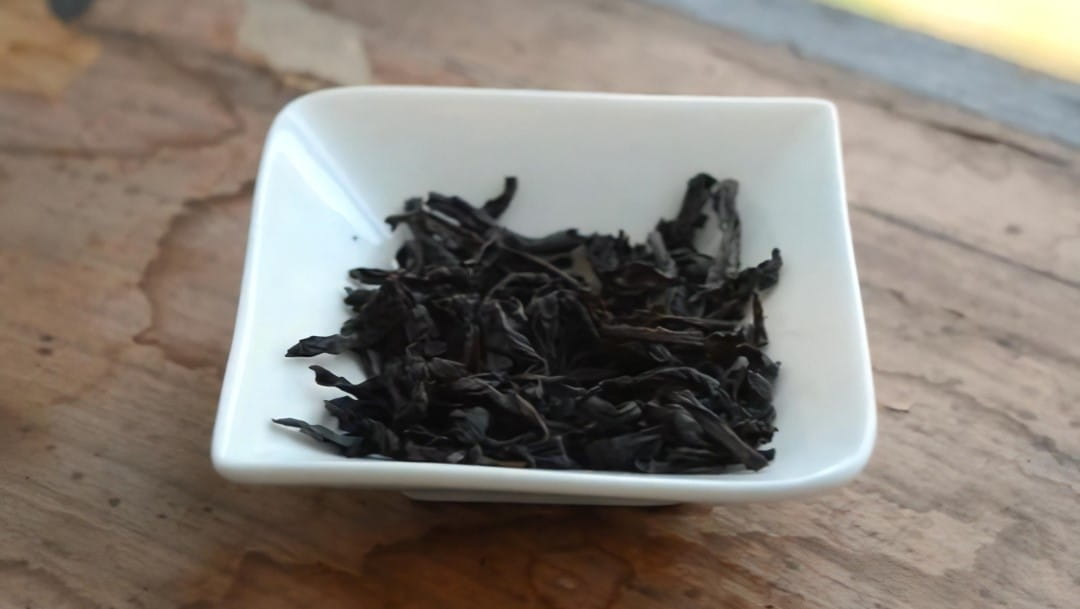
Da Hong Pao is widely considered the rarest conventionally tradeable tea produced in China, and its story begins with a miracle — or at least, a legend that has endured for centuries.
As the story goes, a scholar traveling to sit the emperor’s examinations fell gravely ill in the Wuyi Mountains of Fujian Province. A passing monk offered him tea brewed from the temple’s own trees. The man was miraculously cured. He went on to pass the imperial examinations and marry the emperor’s daughter. When the empress herself later fell ill and could not be cured by traditional medicine, the scholar remembered the tea. She recovered. In gratitude, the emperor commanded that a great red robe — one of the highest honors the imperial court could bestow — be draped over the sacred tea bushes.
Why It’s Rare
To be considered a true Da Hong Pao, the tea must originate from the original six mother trees that still grow beside the temple in the Wuyi Mountains. From these six ancient plants, only a handful of kilograms of tea can be produced in any given year — quantities so small they are reserved almost exclusively for visiting diplomats and foreign dignitaries. In 2005, the last leaves were harvested from the original plants. Since then, one gram of authentic Da Hong Pao from the original six bushes has been valued at roughly $1,400 — approximately 30 times the price of gold by weight.
Other versions of Da Hong Pao, produced from descendants of the original bushes in the same mountain region, are available to tea enthusiasts and offer a genuine taste of its rich, mineral-layered, rock oolong character. But the original? It now resides in museums, offered as gifts to world leaders, and treasured as a Chinese national cultural relic.
#2 — West Lake Lotus Tea (Trà Sen Tây Hồ), Vietnam
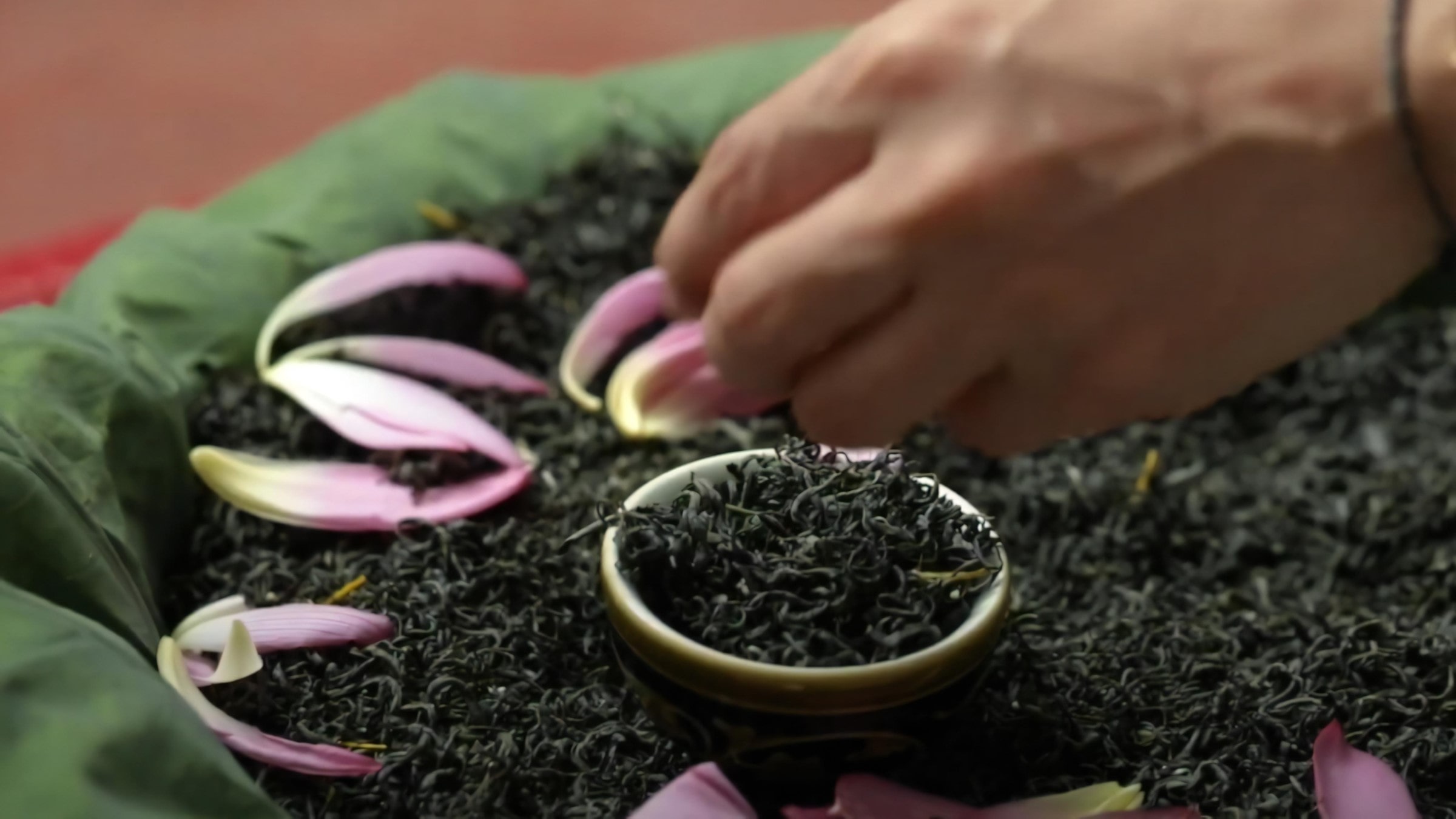
Of all the teas on this list, none carries a more remarkable story — or demands a greater act of human devotion — than West Lake Lotus Tea, a true green tea that carries within every leaf the living fragrance of fresh lotus blossoms, woven in through a painstaking traditional process unlike anything else in the tea world.
In the ancient heart of Hanoi, where morning mist rises from sacred waters, there grows a lotus unlike any other on earth. The Sen Bách Diệp — the Hundred-Petaled Lotus — blooms only in the mystical waters of West Lake, a flower so rare and so beloved that for a thousand years it has been celebrated in the folk songs of the capital:
“There lies gold, here lies black bronze. There blooms the celestial flower, here the lotus of West Lake.”
This is no ordinary flower, and the tea born from its essence is no ordinary brew.
Why It’s Rare
The West Lake Lotus Tea is rare for reasons that go far beyond supply and demand. The Hundred-Petaled Lotus is indigenous to West Lake alone. Nowhere else in Vietnam — nowhere else on earth — does this variety exist. Its fragrance is the product of what the ancients called a địa linh: a place of spiritual power where the essential energies of heaven and earth converge. The West Lake’s ancient soil, enriched by millennia of Red River sediment deposited to depths of three to four feet, gives these lotuses a scent so complex and intoxicating that those who smell it speak of being transported.
And then there is the making.
The Craft That Borders on Devotion
Creating authentic West Lake Lotus Tea is perhaps the most labor-intensive tea production process in the world. The work begins in the pre-dawn darkness of June, when Hanoi’s lotus season arrives like a golden benediction. Before the first rays of sunlight pierce the morning mist, gatherers glide small boats through the maze of upright lotus stems — because once daylight claims the lake, the magical window closes. The climbing sun scatters the precious lotus essence to the winds.
The gatherers seek only the hàm tiếu — the half-smiling buds just beginning to part their lips, caught at the exact instant when their fragrance reaches its most intoxicating peak. Each precious bloom is wrapped in lotus leaves to protect its essence.
Back on shore, the women of Quang An — the ancient peninsula that extends into the heart of West Lake — begin the most painstaking part of their work. The craft of lotus tea scenting passes like a sacred flame from mother to daughter, generation to generation. Each lotus bloom must be opened by hand. First the large outer petals are removed, then the smaller inner petals, until the golden heart is revealed — the white anthers resting atop the stamens, holding what tea masters call the gạo sen, or lotus rice. These tiny white treasures are the flower’s most precious gift.
The extraction must be done with extraordinary delicacy. “Extracting the lotus rice is pure artistry,” explains master artisan Hoàng Anh Sướng, who has served West Lake Lotus Tea to Emperor Akihito of Japan, President Xi Jinping of China, and billionaire Bill Gates. “You must know exactly how to coax these tiny white treasures from their home without crushing them. If your hands are clumsy, if your touch is too heavy, the rice will be bruised and its fragrance will sour before it ever reaches the tea.”
The lotus rice is then layered with the finest Vietnamese tea leaves — most prized are Tân Cương tea from Thái Nguyên, and ancient Shan Tuyết teas from the northwestern mountains, grown at elevations above 6,500 feet on trees hundreds or even thousands of years old. One layer of lotus rice. One layer of tea. Sealed inside earthenware crocks, worked in rooms without air conditioning or fans on Hanoi’s sweltering summer days, where temperatures can soar above 100°F. Any breeze would steal the precious lotus essence.
This process repeats — not once, not twice, but seven to eight times, sometimes ten. Every 24 to 48 hours, the old lotus rice is sifted out by hand and replaced with fresh rice to weave new layers of fragrance. The entire process takes between 15 and 24 days. Some master artisans have been known to scent their tea for an entire year. To make just one kilogram (2.2 lb) of finished lotus tea requires between 1,000 and 1,500 individual lotus blooms, each costing the equivalent of about 50 to 60 US cents at the source — and the total price of a single kilogram (2.2 lb) of authentic West Lake Lotus Tea can reach roughly $1,000 to $1,500 USD.
The Vietnamese have a name for this process: dệt hương — literally, “weaving fragrance.” And fragrance it is, woven into every tea leaf as deliberately and lovingly as thread into silk.
Today, authentic West Lake Lotus Tea is still crafted in limited seasonal batches by a small number of Quang An artisans — carefully preserved by dedicated practitioners. In ancient Vietnam, this tea was reserved for emperors and nobles, earning it the title Thiên cổ đệ nhất trà: “The First Tea Under Heaven.” That title, it turns out, comes with a history far richer than any single article can hold.
Yet even this portrait barely scratches the surface of West Lake Lotus Tea’s story. Its history is not simply old — it is layered, mythic, and bound to the very identity of Hanoi itself. For those who feel the pull of something deeper, that story continues in “Lotus Tea Legend — Part I: The Sacred History of the West Lake Lotus,” where the full thousand-year journey of this extraordinary tea unfolds — from the dragon-blessed waters of ancient Thăng Long to the hands of the artisans who still carry its flame today.
#3 — Gyokuro, Japan
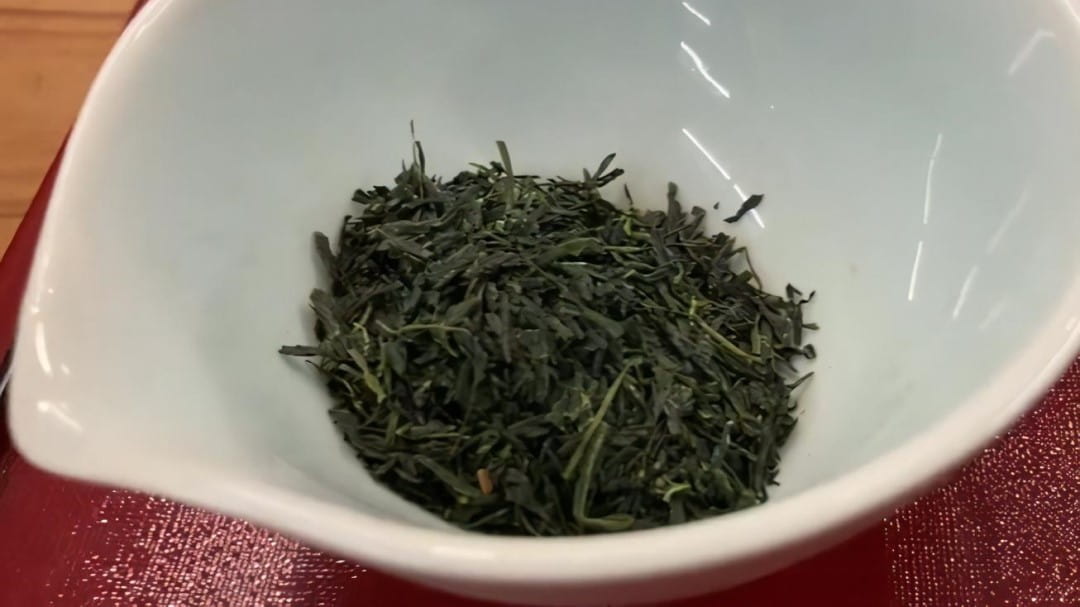
Japan produces some of the world’s finest green teas, but among them, Gyokuro stands apart. Its name translates to “Jade Dew” or “Pearl Dew” — a fitting name for something this carefully crafted and this difficult to produce.
Why It’s Rare
The rarity of Gyokuro begins with what the farmer deliberately withholds: sunlight. For three weeks before harvest, the tea plants are covered with fine netting, cutting them off from direct light. This unusual treatment prevents the plants from converting theanine — the amino acid responsible for Gyokuro’s signature sweet, savory, umami flavor — into bitter catechins. The shading must be precise and sustained, demanding constant attention from the grower.
After the shading period, only the top three sprouts of each plant are selected — the youngest growth, richest in nutrients and flavor. The leaves are then steamed, rolled, and carefully dried. The entire process, from shading to harvest to processing, is so labor-intensive that only a small fraction of Japanese tea production is dedicated to Gyokuro at all. You’ll rarely encounter it in ordinary tea shops; it is a tea for those who seek it out.
The result is a brew unlike any other green tea: deep green, almost marine in character, with a sweetness and depth that can surprise even experienced tea drinkers.
#4 — Jun Shan Yin Zhen (Yellow Needle), China
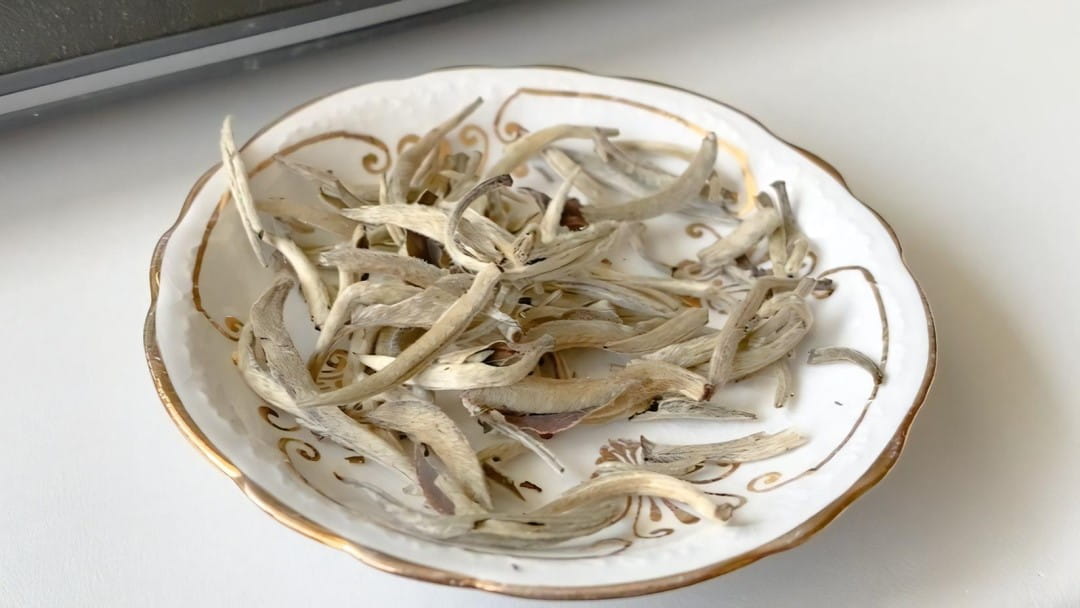
Yellow tea is the rarest of the six main categories of tea in the world. And within that already rare category, Jun Shan Yin Zhen — sometimes called the ancestor of all yellow teas — is the most prized.
Why It’s Rare
The reason for its rarity is almost absurdly geographical. Jun Shan Yin Zhen can only be produced on Junshan Island, a tiny landmass on Dongting Lake in Hunan Province, China. The island covers less than one square kilometer in total area. That’s it. The entire production of authentic Jun Shan Yin Zhen comes from this single, tiny island — which is where monks living in a lakeside temple first developed the method of producing yellow tea centuries ago.
Only the topmost buds of the tea plant are used, adding another layer of selectivity to an already microscopic production. The result is a tea of extraordinary delicacy: soft, mellow, with a natural sweetness that distinguishes it clearly from green tea, its closest relative. Beware of imitations — some producers attempt to replicate this tea elsewhere, but without the island’s unique terroir, the result is something fundamentally different.
#5 — Tie Guan Yin (Iron Goddess of Mercy), China
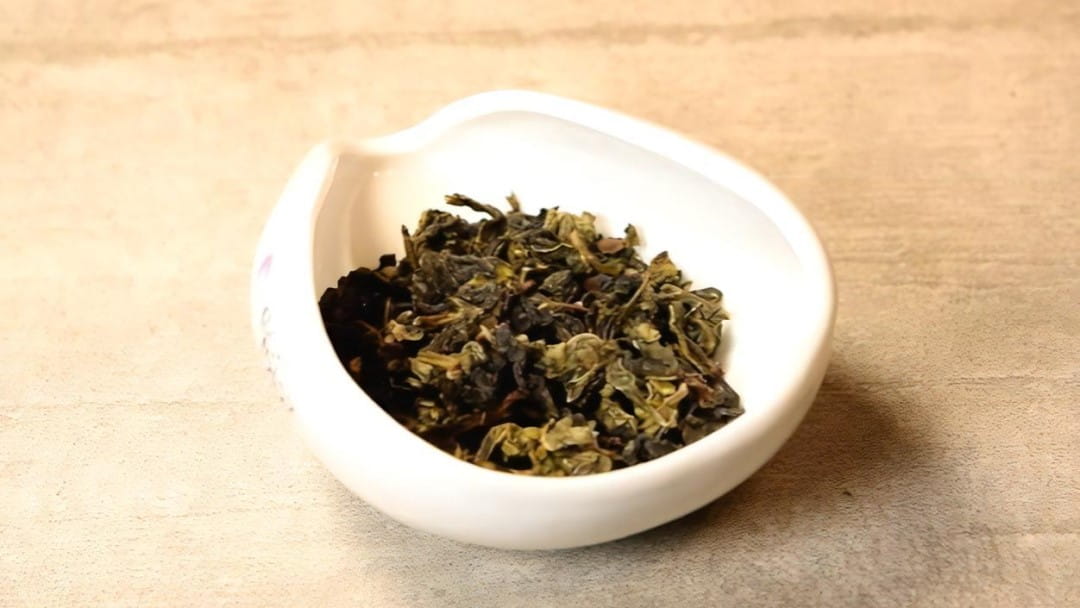
Some teas are rare because of where they grow. Others, because of how they are made. Tie Guan Yin is rare for a third reason entirely: because of what it means — and because the version worthy of that meaning is extraordinarily difficult to find.
Why It’s Rare
The name alone carries weight. Tie Guan Yin translates to “Iron Goddess of Mercy,” named after Guanyin, the Buddhist deity of compassion. Legend holds that a poor farmer discovered a neglected iron statue of Guanyin in a crumbling temple and, despite his poverty, devoted himself to restoring and caring for it. The goddess appeared to him in a dream and guided him to a tea shoot growing behind the temple — a gift in return for his devotion. That shoot became the origin of one of China’s most celebrated teas.
The finest Tie Guan Yin is grown in the highest elevations of Fujian Province, where the altitude, humidity, and mineral-rich soil conspire to produce leaves with a floral complexity that lower-grown versions simply cannot replicate. The production process is precise and unforgiving: the leaves are sun-dried, then go through an exacting sequence of rolling, oxidizing, and roasting that determines whether the final tea achieves its signature character — a buttery mouthfeel, sweet orchid notes, and a lingering finish that tea masters describe as hui gan, the returning sweetness that blooms at the back of the throat long after the cup is empty.
One of Tie Guan Yin’s most remarkable qualities is its longevity in the cup: the finest leaves can be steeped up to seven times before beginning to lose their character, each infusion revealing a slightly different facet of the same complex flavor. At its rarest and most prized, Tie Guan Yin commands around $1,500 per pound — a reflection not just of the tea’s quality, but of the mythic devotion that, according to legend, brought it into existence in the first place.
#6 — Vintage Narcissus Wu Yi Oolong, China
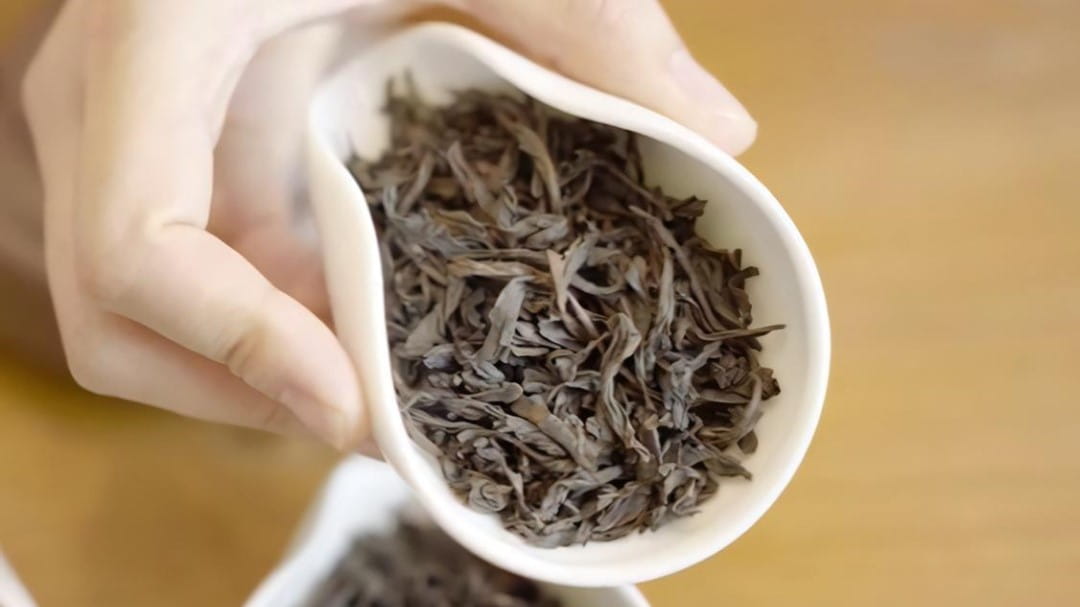
Named after the Greek mythological figure who found beauty in everything he beheld, Vintage Narcissus is an oolong tea that has earned its price through time — literally.
Why It’s Rare
Produced in the Wuyi Mountains of Fujian Province — the same storied landscape that gave us Da Hong Pao — this heavily oxidized oolong undergoes an aging process that separates it from almost every other tea on earth. Like a fine wine or aged whisky, Vintage Narcissus is fired once every two years to remove excess moisture, allowing it to develop over time into something richer and more complex than it was at harvest.
The tea’s character is deep and woodsy, with a chocolatey core and subtle notes of nut and florals. Its layered flavor — which genuinely cannot be replicated in younger teas — is the product of years, sometimes decades, of patient aging. Some of the most sought-after aged boxes of Narcissus have become collector’s objects in their own right, traded among serious tea aficionados for remarkable sums. At its finest, Vintage Narcissus can reach prices of around $6,500 per kilogram.
#7 — Yellow Gold Tea Buds, Singapore
Most rare teas earn their status through age, geography, or the difficulty of their harvest. Yellow Gold Tea Buds earn it through all of the above — and then add something no other tea on earth can claim: real gold.
Why It’s Rare
Yellow Gold Tea Buds originated in China, where they were historically a favorite among Chinese emperors — a tea considered so luxurious and so singular that it was regarded as fit only for imperial courts. Today, the tea is sold exclusively in Singapore, adding an additional layer of scarcity for anyone outside Southeast Asia hoping to get their hands on it.
The harvest itself is already extraordinary. The buds can only be collected from one specific location, and only on a single day each year — a window so narrow that the entire annual production is measured in grams rather than pounds. On that one day, pickers use golden shears to cut the buds, which are then carefully sun-dried to preserve their delicate character.
What Makes It Unique
But the most arresting detail comes last: once dried, the buds are sprayed with 24-karat edible gold flakes. This is not mere showmanship. The practice ties the tea to its imperial heritage, when gold was synonymous with the highest expressions of Chinese luxury and power. The result, steeped in a clear teapot, is a spectacle as much as a beverage — golden buds unfurling in hot water, releasing a flavor described as uniquely floral and metallic, with a clean, shimmering aftertaste. The tea is also celebrated for its anti-aging properties, a health claim that has long been part of its mystique.
Priced at around $3,545 per pound, Yellow Gold Tea Buds sit comfortably among the most expensive teas in the world. But more than the price, it is the combination of imperial history, once-a-year harvest, single-origin exclusivity, and literal gold that makes this tea a category unto itself — a reminder that in the world of rare tea, there is always something that manages to astonish you all over again.
The True Nature of Rarity
Each of the teas on this list is rare for a different reason. Some, like Yellow Gold Tea Buds, are rare because the harvest window is a single day a year, the location a single place on earth. Others, like Da Hong Pao, because the original source has been all but exhausted. Jun Shan Yin Zhen is a prisoner of geography; Vintage Narcissus, of time; Gyokuro, of the sheer patience its production demands.
West Lake Lotus Tea is rare in a different way — not because of accident, geology, or age, but because of the labor involved. Producing it requires large quantities of fresh lotus blossoms, repeated scenting over time, and controlled working conditions during the summer season. The process is time-consuming and limits how much can be produced each year. It also depends on a specific lotus variety native to West Lake and not found elsewhere, which further constrains supply.
In a world that increasingly values speed and scale, this kind of production constraint is another form of rarity.