
Trong đầm gì đẹp bằng sen,
Lá xanh, bông trắng lại chen nhụy vàng.
Nhụy vàng, bông trắng, lá xanh,
Gần bùn mà chẳng hôi tanh mùi bùn.
Literal Translation:
In the pond there are beautiful lotuses,
Green leaves, white blossoms, yellow stamens.
White blossoms, yellow stamens, green leaves,
Close to the mud, yet untainted by its smell.
— VIETNAMESE FOLK POEM
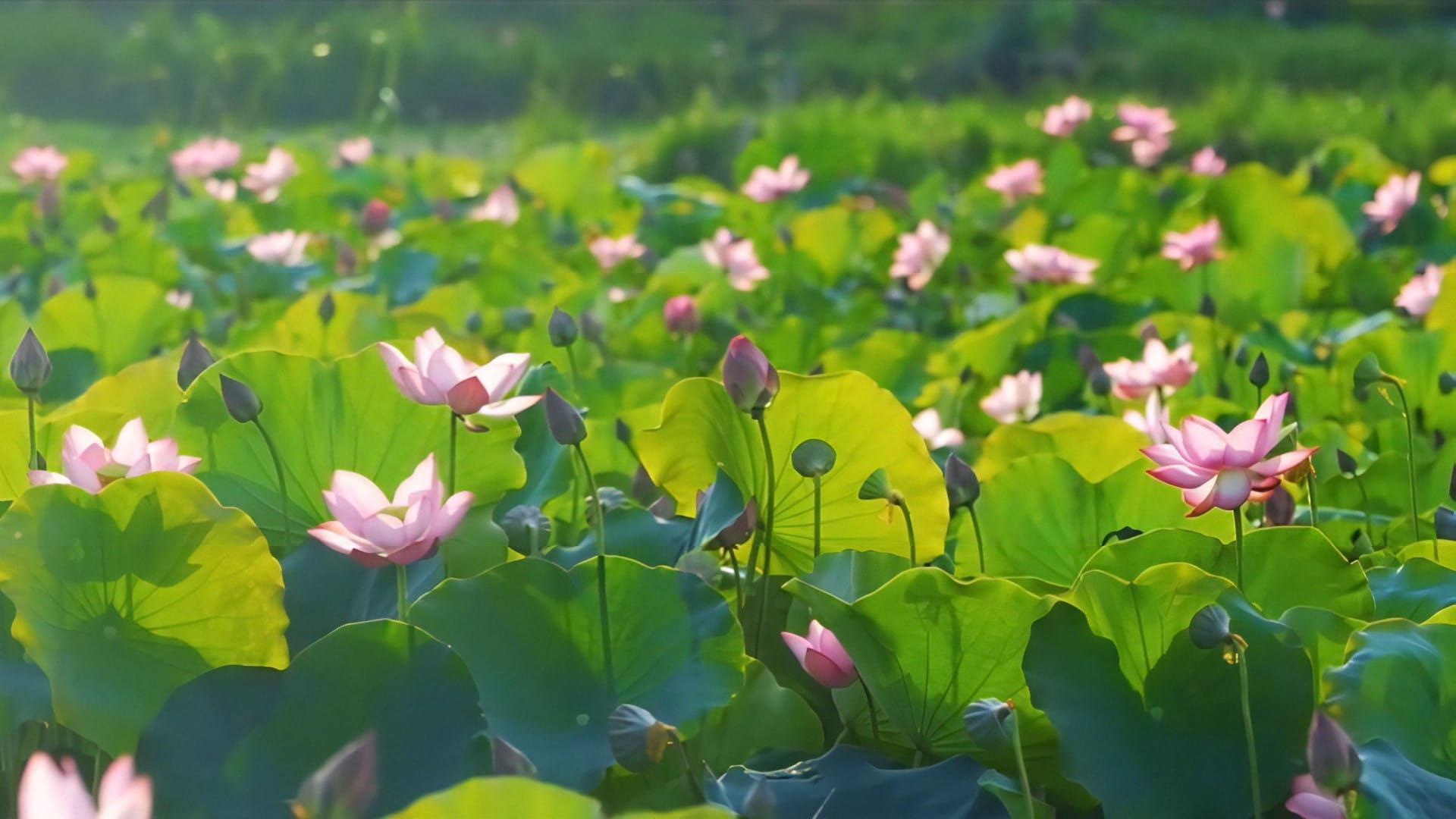
There is a flower in Vietnam that seems to carry an entire civilization within its petals. It grows in murky ponds and slow-moving rivers, pushing its long stem up from the mud, and blooms each morning in pristine, fragrant beauty — only to quietly close again at dusk. For the Vietnamese people, this daily miracle is not merely botanical. It is a parable, a philosophy, and a portrait of the national character all at once.
The lotus — known in Vietnamese as hoa sen — has been woven into the fabric of Vietnamese thought, art, religion, and everyday life for thousands of years.
Understanding the lotus means understanding something essential about Vietnam: that beauty and resilience are not opposites, and that a flower can be both deeply humble and profoundly sacred at the same time.
The cultural origins of the lotus in Vietnam
The lotus arrived through the currents of Buddhist teaching — which, according to historical records, reached Vietnamese shores very early, even before it spread widely elsewhere in the region — and through the long cultural exchange with neighboring China. Both channels carried lotus symbolism with them, and Vietnam absorbed it. What happened next, however, was distinctly Vietnamese.
In Sanskrit, the word for the lotus receptacle — đài sen — shares meaning with the word for the uterus, tying the flower to birth, fertility, and the source of life. These ideas settled into Vietnamese religious imagination and took on a life of their own.
From Chinese literary culture came a different kind of influence. The scholar Chu Đôn Di (1017–1073) wrote the celebrated essay Ái liên thuyết — “On Loving the Lotus” — describing the flower as born in mud without being stained, its hollow interior honest, its upright stem unwavering, its fragrance drifting further the more distant one stands. For him, the lotus was the perfect gentleman — the quân tử — among flowers. That image crossed into Vietnamese literature and never left.
But Vietnam did not simply borrow these ideas. It reshaped them, layered them with its own sensibilities, and made the lotus something that belongs to Vietnamese culture as fully as to anywhere else — perhaps more so.
The Lotus and Buddhism: A Language of the Spirit
Perhaps nowhere is the lotus more deeply embedded than in Vietnamese Buddhism. Walk into almost any Buddhist temple in Vietnam and you will encounter the lotus at every turn: carved into stone pedestals, painted on lacquered surfaces, molded into incense burners and ritual vessels. The connection between the lotus and the Buddha is inseparable.
The image of the Buddha — and the bodhisattva Quan Âm — seated upon a lotus throne, in the posture known as liên hoa tọa (the lotus seat), is one of the most familiar and beloved images in Vietnamese religious life. This seated position, adopted during meditation and sutra recitation, is believed to bring stillness to both body and mind. Even the act of pressing one’s palms together in prayer is said to mirror the shape of an unopened lotus bud.
The lotus is first like a flower — within the mud, yet unstained. Just as the dharma, pure in this world, untouched by worldly impurity.
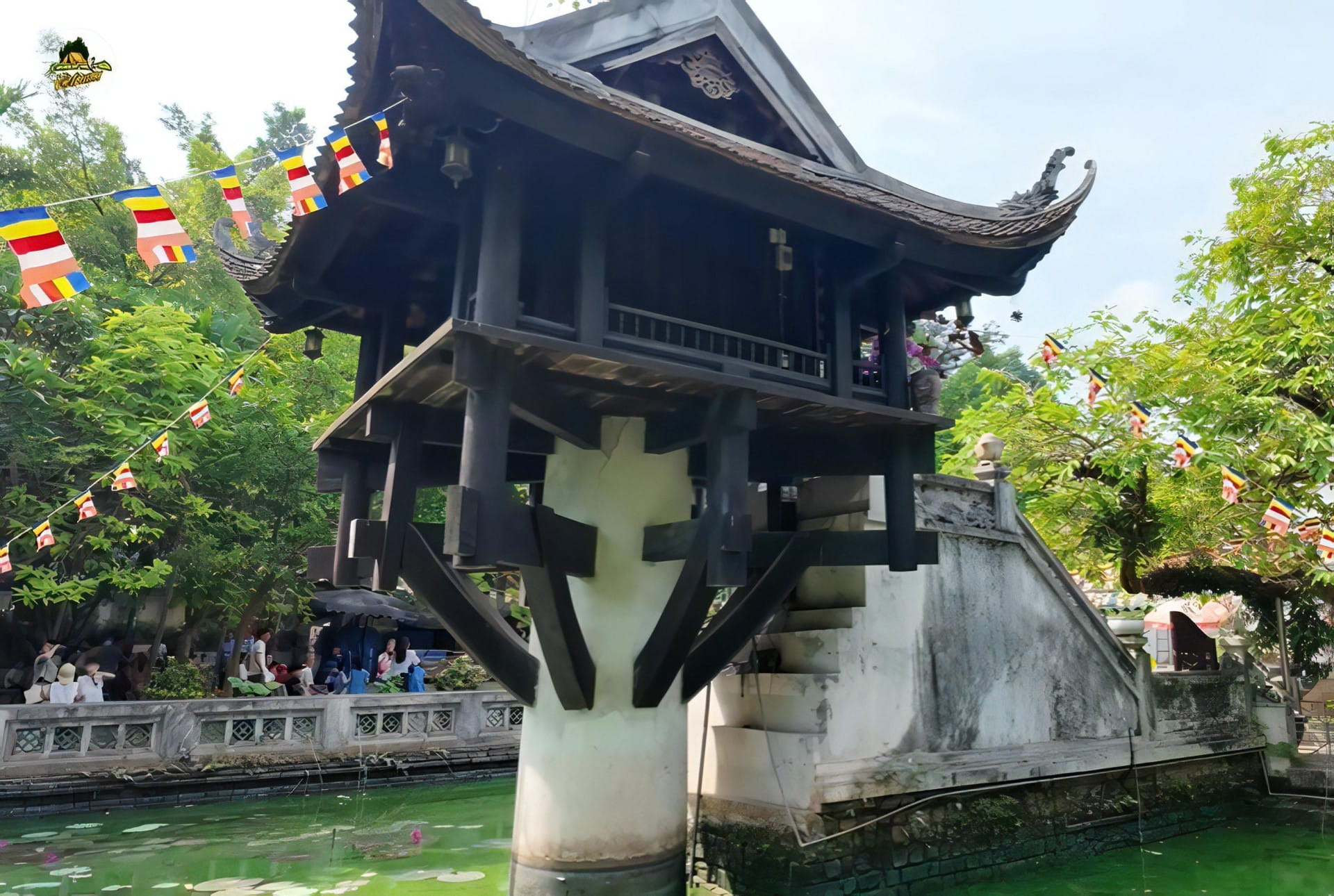
One of the most celebrated Buddhist structures in all of Vietnam — the One Pillar Pagoda in Hanoi, built during the Lý dynasty — is itself a architectural rendering of a lotus blossom rising from the water. It is a single wooden structure on a stone pillar, designed to evoke the image of a lotus flower in full bloom above a reflective pond. Scholars have described it as the yoni — the feminine creative principle — received and transformed by Vietnamese architectural genius into something transcendent.
Buddhist philosophy also uses the lotus as a metaphor for the cycle of existence. The lotus plant embodies all three stages of time simultaneously: the bud represents the past, the open flower the present, and the seed pod the future — each inseparable from the others, each part of an unbroken continuum. This reflects the Buddhist concept of cause and effect, of karma and rebirth, rendered visible in a single plant.
What Each Color Whispers
The lotus comes in a quiet spectrum, and in Vietnamese and Buddhist tradition, each color carries its own meaning. The palette of the lotus is, in a sense, the palette of human aspiration.
Purity of spirit and inner tranquility. The white lotus embodies the serene and the transcendent — that which rises above worldly attachment.
The supreme lotus of the Buddha himself. Pink represents compassion, the open heart, and the essential nature of beauty as it was at the beginning.
Wisdom, intellect, and the harmony between humanity and nature. In Buddhism, the blue lotus carries a sense of partial opening — knowledge still unfolding.
Love and compassion in their most passionate form. The red lotus is linked to the heart’s warmth, to the fire of genuine feeling.
Mystery and esoteric teaching. The four petals of the purple lotus are said to reveal the Buddha’s teachings on awakening in their most hidden form.
The Lotus in Vietnamese Art and Architecture
Archaeological evidence shows that lotus motifs appeared in Vietnam as early as the 3rd to 6th centuries CE, when roof tiles in the ancient citadel of Luy Lâu were already decorated with the lotus. By the 10th century, the flower had become a standard element in the architectural vocabulary of Vietnamese Buddhist temples and monuments.
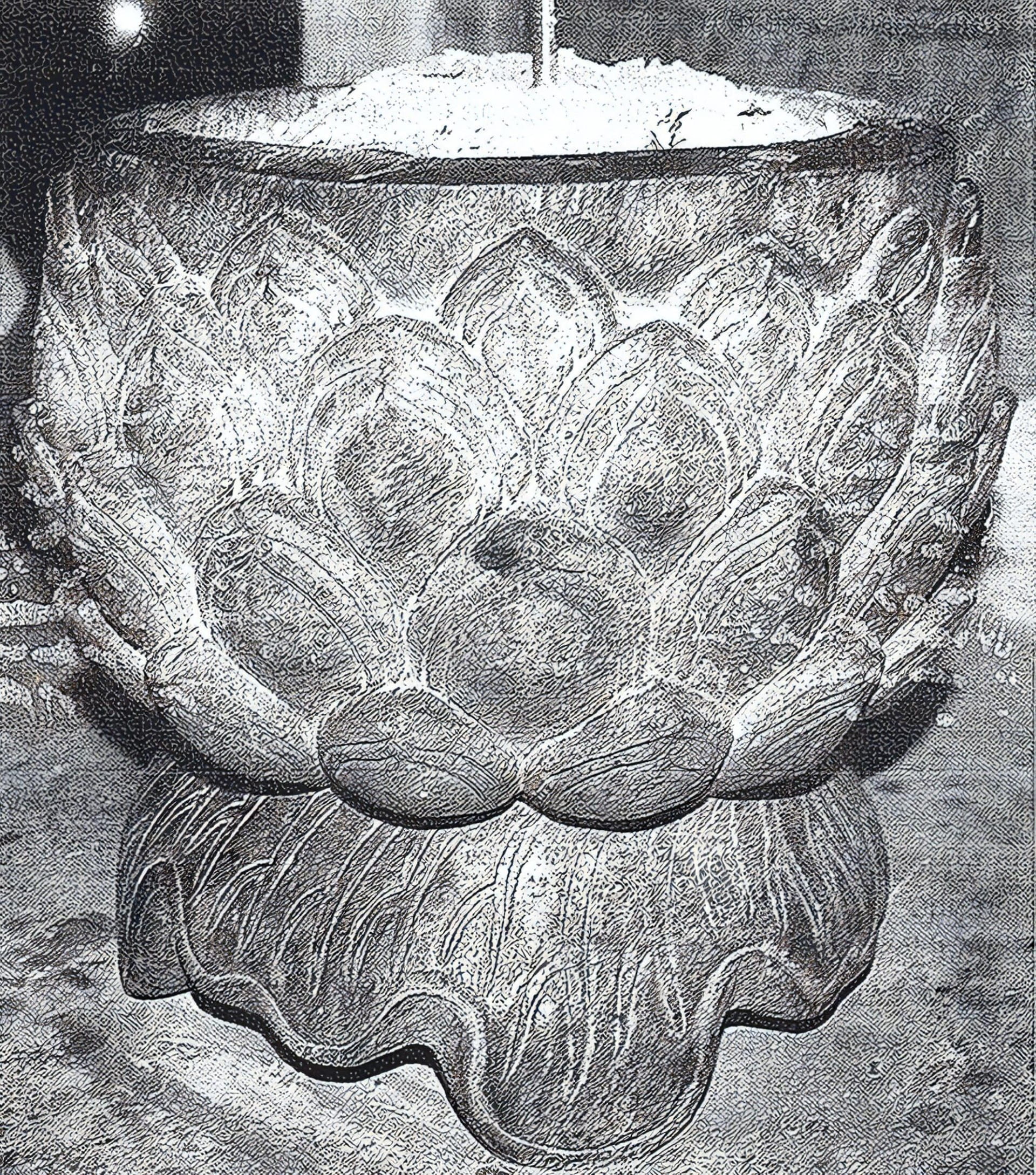
The Lý and Trần dynasties (roughly the 11th through 14th centuries) represent a golden age of Buddhist architecture in Vietnam, and the lotus was at its center. Stone column bases carved in the shape of lotus blossoms, lotus-shaped stone altars, and decoratively incised stele from this era have survived the centuries — their craftsmanship still breathtaking today. The stone incense bowl at Hòe Nhai pagoda, for instance, sculpted in the 18th–19th centuries, rests upon a carved lotus base of remarkable refinement.
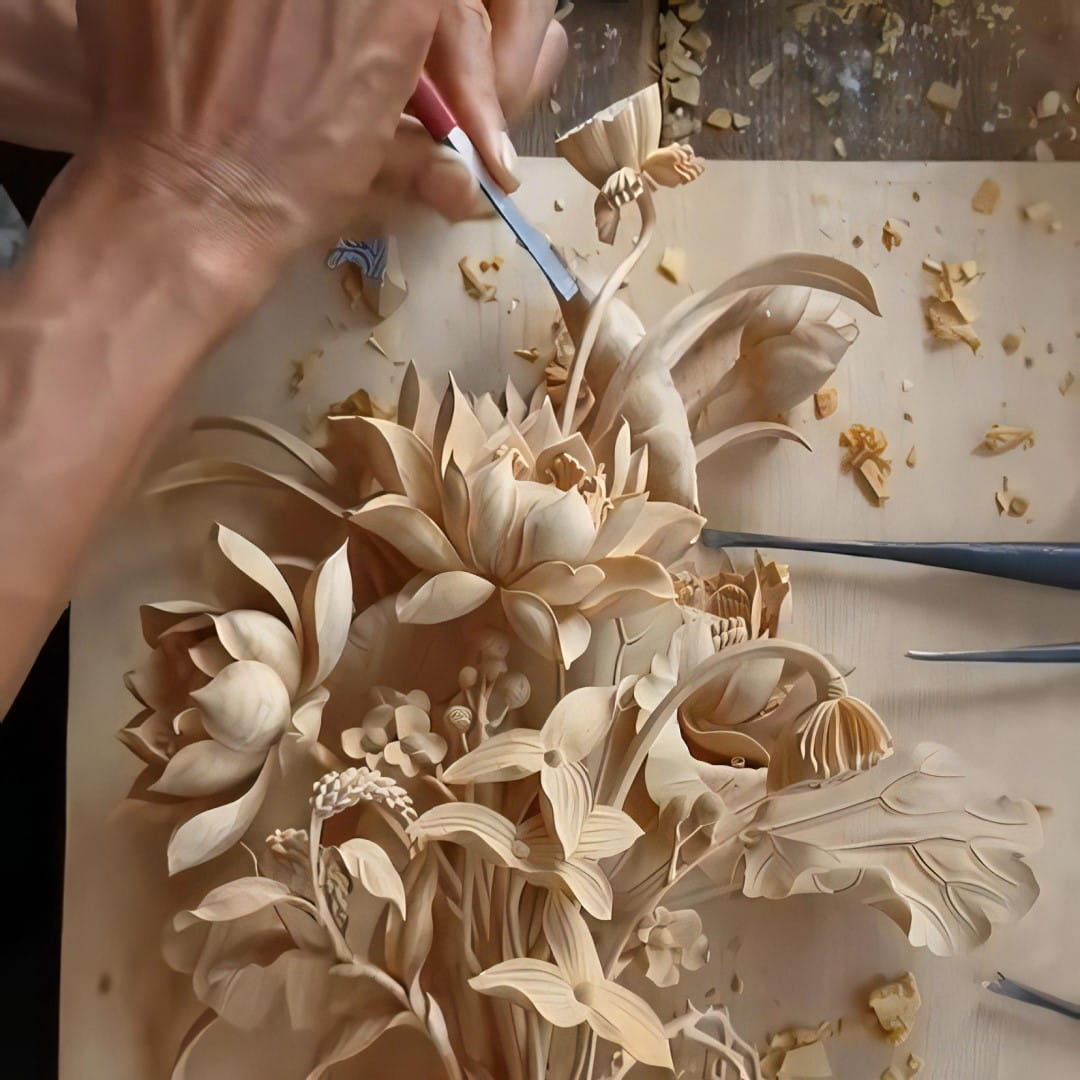
In Vietnamese folk woodcarving, the lotus appears frequently in interior decoration, feng shui arrangements, and spiritual architecture. More than a decorative motif, it serves as a visual expression of purity, harmony, and quiet dignity within living and sacred spaces.
The lotus also appears in Vietnamese poetry going back centuries. Nguyễn Trãi, the great 15th-century patriot and scholar, wrote in his Nôm poem Hoa Sen about the lotus as a model of noble character — standing upright in the pond, its excellence self-evident without display. This image resonated so deeply with the Vietnamese popular imagination that it passed from elite literary culture into folk song and proverb, eventually becoming a shared national symbol.
A Symbol of the Vietnamese People
Beyond religion and art, the lotus has come to represent something more personal and immediate: the Vietnamese people themselves. The flower’s defining characteristic — thriving in muddy, challenging conditions while maintaining absolute purity — is widely understood as a metaphor for the Vietnamese national spirit.
In the Vietnamese cultural imagination, the pond’s mud represents the temptations, hardships, and moral hazards of life — what Buddhist teaching calls greed, anger, and ignorance. The lotus rising clean and fragrant above that mud becomes an image of the human capacity to transcend circumstances, to preserve dignity and goodness no matter the environment.
The lotus is also strongly associated with Vietnamese womanhood. Its delicate yet vigorous beauty — fragrant, graceful, unhurried — is frequently used to evoke the qualities of the Vietnamese woman: gentle strength, inner refinement, and quiet endurance. Vietnamese folk songs compare young women to lotus blossoms floating on the water, and the image recurs throughout centuries of poetry and song.
The lotus is widely embraced across the country as Vietnam’s quốc hoa — national flower — precisely because it belongs to no single region, season, or social class. It is simply, universally, Vietnamese.
The Art of Lotus Tea: A Living Tradition
One of the most exquisite expressions of the lotus in Vietnamese daily life is the ancient art of lotus tea—a tradition quietly preserved for centuries along the shores of Tây Hồ (West Lake) in Hanoi. The art of West Lake lotus tea is one of Vietnam’s most refined traditional crafts, rooted in centuries of cultural heritage. In Hanoi’s West Lake region, artisans delicately scent high-quality loose leaf tea with the natural fragrance of fresh lotus flowers, a process that requires patience, precision, and deep respect for nature. Each batch is scented by hand, allowing the tea to gently absorb the lotus’s subtle, elegant aroma. More than just a beverage, West Lake lotus tea represents a harmony between human skill and the quiet beauty of the lotus. To explore the deeper history behind this tradition, read Lotus Tea Legend — Part I: The Sacred History of the West Lake Lotus.
The lotus is not a relic. It continues to breathe and bloom through contemporary Vietnamese life in ways both practical and profound. Vietnam’s capital, Hanoi, hosts a Lotus Festival at West Lake each summer, celebrating the flower through cultural performances, artisan exhibitions, and the display of lotus-inspired products — from silk scarves and lacquerware to lotus-seed porridge, lotus tea, and medicinal preparations derived from every part of the plant.
The lotus appears in Hanoi’s interior design, in architectural ornamentation on modern buildings, in the posture of yoga practitioners who sit in padmasana — the lotus position — in the city’s studios. It graces the pages of Vietnamese passports and the insignia of national institutions. The lotus petal’s elegant bilateral symmetry has influenced everything from traditional communal houses to contemporary civic architecture.
Artisans in the village of Phùng Xá have even developed a technique for spinning silk from lotus stems — a rare and painstaking craft in which the fibrous threads drawn from the plant’s hollow stem are woven into a fabric of extraordinary lightness and warmth. Lotus silk scarves from this tradition have been recognized among Vietnam’s most prized cultural handicraft products.
A Flower That Speaks for a Nation
It is rare for a single image to carry so much — theology, philosophy, aesthetic beauty, national identity, daily pleasure, and quiet wisdom all at once. The lotus manages this with a kind of effortless grace that is, in itself, very Vietnamese.
What makes the lotus so enduring as a symbol is not merely its beauty, nor even its impressive biology, but the truth it enacts every single day: that it is possible to be immersed in difficulty and emerge unstained. That purity is not fragility. That the most fragrant thing in the garden grew from the deepest mud.
For visitors coming to Vietnam for the first time, the lotus is a good place to begin. Not just as a pretty flower to photograph at the edge of a temple pond, but as a key — one that unlocks something real about the people who chose it, loved it, and made it their own across thousands of years of history. To understand the lotus is to begin to understand Vietnam.
And perhaps, on your next quiet morning, a cup of West Lake Lotus Tea — its steam rising like incense in the early light — will complete the lesson better than any words.