
Lotus tea represents Vietnam’s most precious brew, created by master artisans who spend weeks scenting premium leaves with the essence of the legendary Bách Diệp lotus.
In the misty hours before dawn breaks over Hanoi’s Westlake, a centuries-old ritual unfolds. Artisans glide through still waters in small boats, carefully gathering lotus blossoms at the precise moment when their fragrance reaches its most intoxicating peak. This is not simply a harvest—it is the beginning of an alchemical process that transforms Vietnam’s most sacred flower into one of the world’s rarest and most prestigious teas.
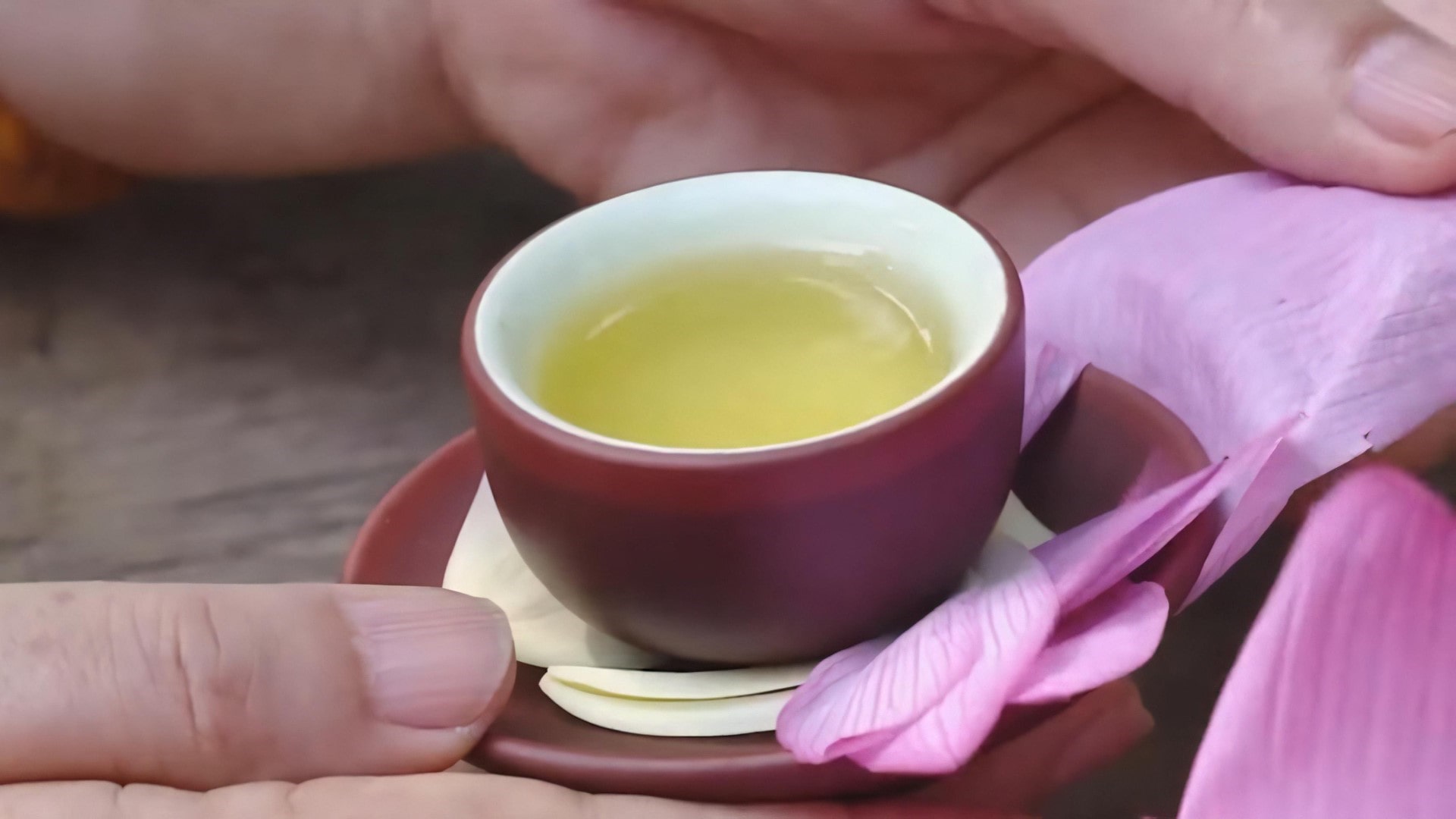
Westlake lotus tea, known locally as “Trà Sen Tây Hồ”, represents a pinnacle of Vietnamese tea culture that has captivated emperors, poets, and connoisseurs for centuries. Unlike mass-produced specialty teas found on the market, this exceptional loose leaf tea can only be created through an intricate handcrafted process that has been passed down through generations of Hanoi artisan families—a tradition so delicate and demanding that fewer than a handful of master tea craftspeople still practice it today.
A flower that exists nowhere else
What makes lotus tea truly extraordinary begins with the flower itself. The Sen Bách Diệp, or Hundred-Petaled Lotus, blooms exclusively in the ancient waters of Westlake in Hanoi. Despite Vietnam’s countless lotus ponds scattered throughout the country, this particular variety—with its hundreds of delicate pink petals and incomparable fragrance—exists nowhere else. The unique terroir of Westlake, enriched by millennia of sediment deposits and what the ancients called “địa linh” or spiritual land, creates growing conditions that cannot be replicated.

For a thousand years, Vietnamese folk songs have celebrated this botanical marvel. The lotus that grows in Westlake’s sacred waters possesses a fragrance so complex and sublime that those who encounter it speak of being transported. Unlike the simple sweetness of common lotus varieties, the Westlake bloom carries notes that seem to contain the very essence of the place: morning mist rising from ancient water, the whisper of wind through temple eaves, and the accumulated dreams of a city that has witnessed dynasties rise and fall.
The ancient art of lotus tea scenting
Creating authentic lotus tea demands not merely skill but what the Vietnamese call “tâm”—heart, intention, the quality of soul that one brings to sacred work. Master tea artisans explain that the process tolerates neither impatience nor shortcuts.
The traditional dry-scenting method, known as “ướp sen khô”, represents the most refined approach to crafting this luxury tea. Between four and six each morning during the brief lotus season in June, harvesters seek out the “nụ hàm tiếu”—half-smiling buds just beginning to open, when their fragrance concentration peaks. Each precious blossom is wrapped in lotus leaves to protect its volatile essence from the climbing sun.
Back in sealed workrooms— where the air grows thick with summer heat yet no fans can be used, lest they steal the precious aroma—artisans carefully separate each petal to extract the lotus rice, the tiny white anthers that hold the flower’s concentrated soul. These delicate treasures are then layered with premium loose leaf tea from Vietnam’s most celebrated growing regions: Tân Cương tea from Thái Nguyên or ancient Shan Tuyết tea from northwestern mountains, where tea trees have stood for centuries.
The craft of lotus tea scenting is surrounded by profound spiritual protocols. Each morning before beginning their work, artisans wash their hands with ritual thoroughness, maintaining both physical cleanliness and spiritual purity. Tradition holds that women during menstruation, or anyone returning from a funeral, must not approach the lotus tea during its scenting—negative energy, it is believed, can corrupt the fragrance and destroy weeks of careful work.

The scenting process repeats seven to ten times over fifteen to twenty-four days, with artisans meticulously replacing old lotus rice with fresh essence to weave deeper layers of fragrance into the tea. Creating just one kilogram (2.2 lbs) of finished lotus tea requires a minimum of one thousand to fifteen hundred individual lotus blooms. The investment of time, labor, and rare materials explains why genuine Westlake lotus tea commands prices befitting its status as “The First Tea Under Heaven” (Thiên cổ đệ nhất trà) in Vietnam.
Alongside the ancient dry-scenting art, recent years have seen the emergence of an alternative technique known as “ướp sen xổi”, or fresh-scenting. This method offers a more accessible approach while still demanding meticulous care and specialized skills.
A heritage worth preserving
The cultural significance of lotus tea extends beyond its sensory qualities. To discover the legend behind Westlake lotus tea is to encounter a rich tapestry of Vietnamese history woven through poetry, imperial courts, and literary romance. The fifteenth-century poet-emperor Lê Thánh Tông composed verses celebrating these flowers, while the great writer Nguyễn Du found inspiration for some of Vietnam’s most beloved poetry during lotus-picking excursions on Westlake.
The marriage of lotus and tea represents a purely Vietnamese creation—indigenous culture refined through centuries into an art form that embodies the distilled wisdom and aesthetic sensibility of Hanoi’s ancient capital.

For modern tea connoisseurs seeking exceptional experiences beyond familiar Chinese gongfu traditions or Japanese ceremonies, lotus tea offers something genuinely unique: a taste of living heritage that cannot be found anywhere else. The high quality of authentic lotus tea reveals itself not only in its ethereal aroma—simultaneously floral, amber-green, and mysteriously complex—but also in its remarkable versatility through multiple steepings. Depending on the grade, properly crafted lotus tea can yield four to seven infusions before releasing its final whisper of fragrance.
As with all rare and expensive teas, the market contains many inferior imitations. True Westlake lotus tea, handcrafted through traditional methods, represents a significant investment—but for those who appreciate the finest loose leaf teas, the experience justifies the price. The exotic character of authentic lotus tea cannot be replicated through artificial scenting or shortcuts in production.
In an era when mass production increasingly dominates the tea industry, Westlake lotus tea reminds us that some treasures cannot be rushed, mechanized, or commodified. This prestigious tea exists as testament to human dedication, cultural continuity, and the patient art of handcrafting excellence—one lotus bloom, one careful layer of scent, one reverent cup at a time.