
West Lake lotus tea is not just a beverage. It is a distillation of seasons, of early-morning labor on the water, of a craft so painstaking that a single kilogram demands the blooms of more than a thousand lotus flowers.
Few things in Vietnamese tea culture carry as much prestige — or as much potential for disappointment — as trà sen Tây Hồ, the lotus-scented tea historically tied to the shores of Hanoi’s West Lake. As demand has grown far beyond the modest supply that West Lake’s lotus ponds can provide, the market has filled with imitations: teas scented with synthetic flavor compounds, teas made from inferior leaves, and teas that borrow the name without any claim to the tradition.
Whether you are purchasing a gift, stocking a personal tea collection, or simply curious about what the authentic product actually tastes like, this guide will walk you through every meaningful distinction — the kind of knowledge that usually takes years of experience to acquire.
Why West Lake Lotus Tea Is So Rare (and So Expensive)
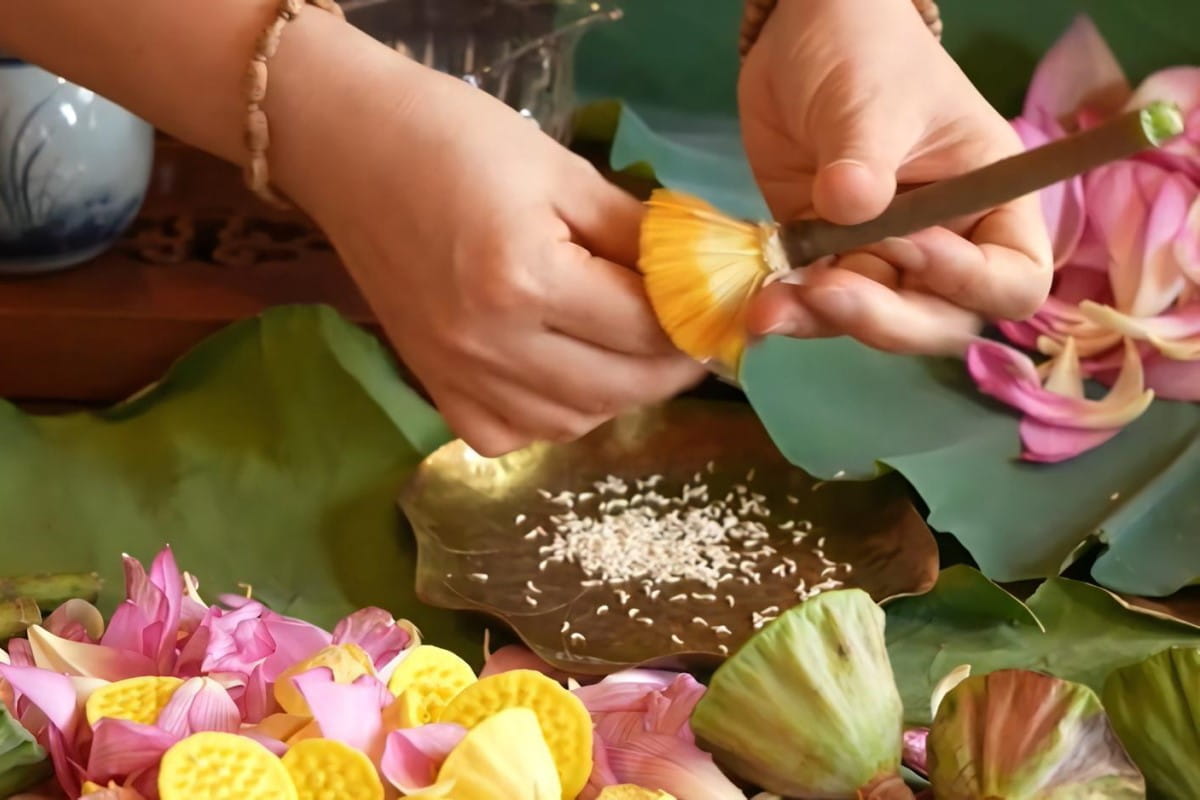
To understand why counterfeiting is so rampant, you first need to appreciate just how difficult the real thing is to produce. Authentic West Lake lotus tea is made by layering high-grade green tea — typically sourced from renowned growing regions like Thai Nguyen or Tan Cuong — with the gạo sen, the tiny rice-shaped anthers found inside each lotus blossom. These anthers carry the flower’s concentrated fragrance.
The process is not a single step. In the traditional dry-scenting method, the tea and fresh gạo sen are layered and left to rest so the tea gradually absorbs the flower’s oils. The old anthers are then sifted out, and the entire cycle repeats — typically seven to eight times — over the course of three weeks or more. For every kilogram (2.2 lbs) of finished tea, artisans use roughly 1,200 to 1,500 lotus blossoms. The harvesting alone must happen before sunrise, while the flowers are still opening and their fragrance is at its peak.
Want to see exactly how it’s done? Lotus Tea Legend — Part II: The Art of Handcrafted Lotus Scenting
The economic math is unforgiving. Even at the most conservative estimates, a legitimate kilogram (2.2 lbs) of West Lake lotus tea costs somewhere between $700 to $1000 USD. Premium batches made with especially meticulous traditional methods can reach double that figure. When you see a product labeled “West Lake lotus tea” selling for the equivalent of a few dollars per hundred grams, the gap in price is not a bargain. It is a signal.
The entire West Lake area contains only a handful of lotus ponds. Even combining all the artisans who work with this tea, total annual production amounts to perhaps a few hundred kilograms — nowhere near enough to supply the volume of products currently marketed under the West Lake name.
Two Authentic Types — and How They Differ
Before comparing real to fake, it helps to understand that “authentic West Lake lotus tea” itself comes in two distinct forms. Both are legitimate. Both are made without synthetic flavor agents. But they offer different experiences, and confusing them with each other — or with inferior alternatives — is easy if you don’t know what to look for.
The Traditional Dry-Scenting Method
This is the classic form described above: gạo sen carefully extracted from each blossom, layered with dried green tea leaves, and re-scented multiple times over several weeks. Each cycle of ướp (scenting) and sấy (drying) drives the fragrance deeper into the leaf structure. The result is a tea whose perfume is genuinely embedded, not applied to the surface.
A well-made batch crafted this way will hold its lotus fragrance through three, four, even five steepings. The dry leaves tend to be darker than ordinary green tea — closer to gray-black than the bright green of unscented leaves — because repeated exposure to the moisture of fresh anthers darkens the leaf over time. This color change is one of the most reliable visual markers of authenticity.
The Fresh Blossom Scenting Method
In this approach, loose green tea is placed directly inside a fresh lotus blossom — nestled among the petals — and the flower is then gently tied closed with soft twine. The closed flower is left overnight, or sometimes left on the lake itself, so the tea rests inside a living blossom and absorbs the fragrance in an entirely natural, uninterrupted environment. The following morning, the tea is removed and enjoyed.
This style — sometimes called ướp xổi, or fresh-scenting — produces a more delicate, ephemeral fragrance than the dry-scented version. It is best consumed quickly rather than stored. The experience is subtle, distinctly gentle, and beloved among Hanoians who grew up with it.
Both types share one quality: the lotus scent, however light or pronounced, is natural. It has depth, it lingers in the spent leaves, and it does not produce the unpleasant sensation that artificial flavoring tends to leave behind.
The Chemistry of Counterfeits — What’s Actually in Fake Lotus Tea
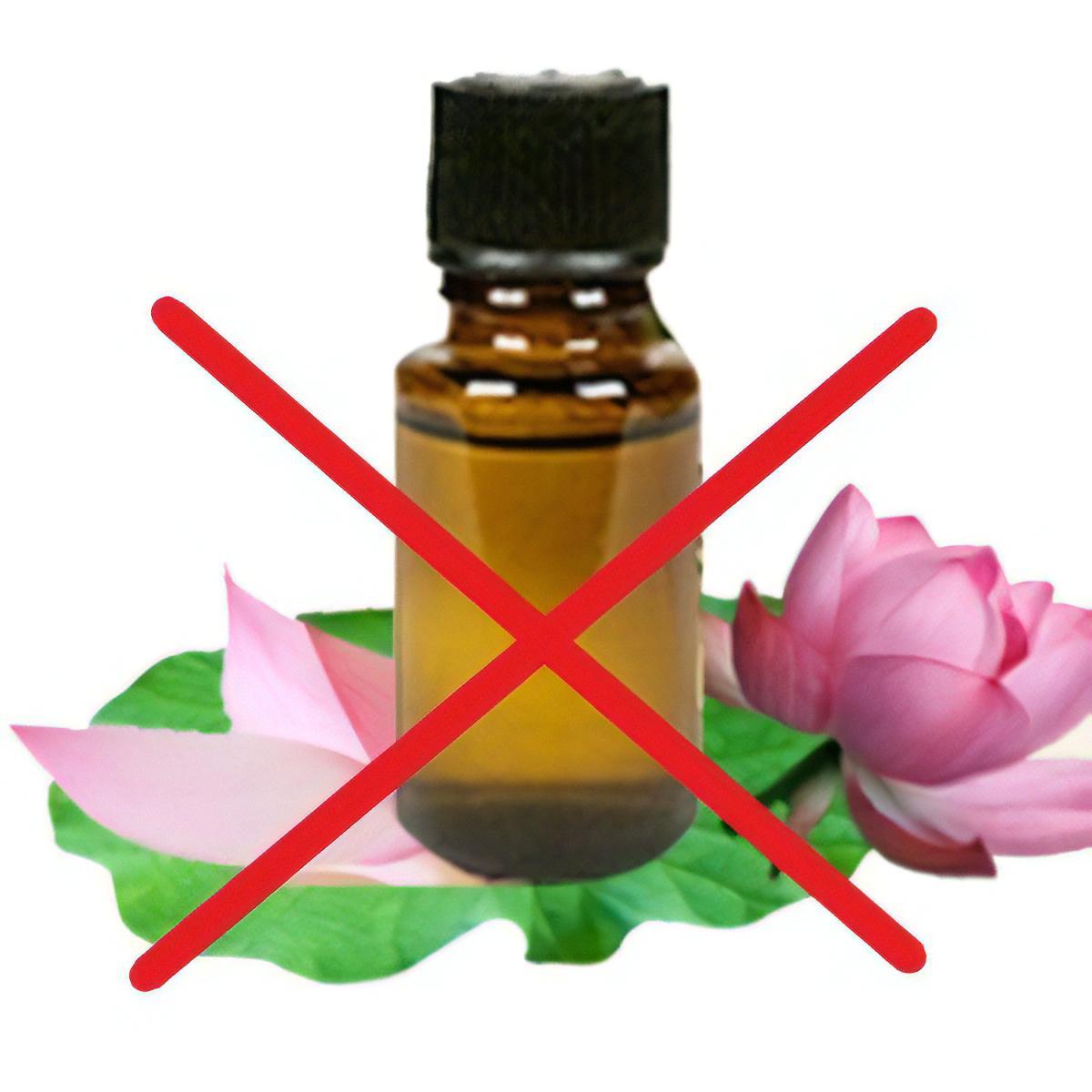
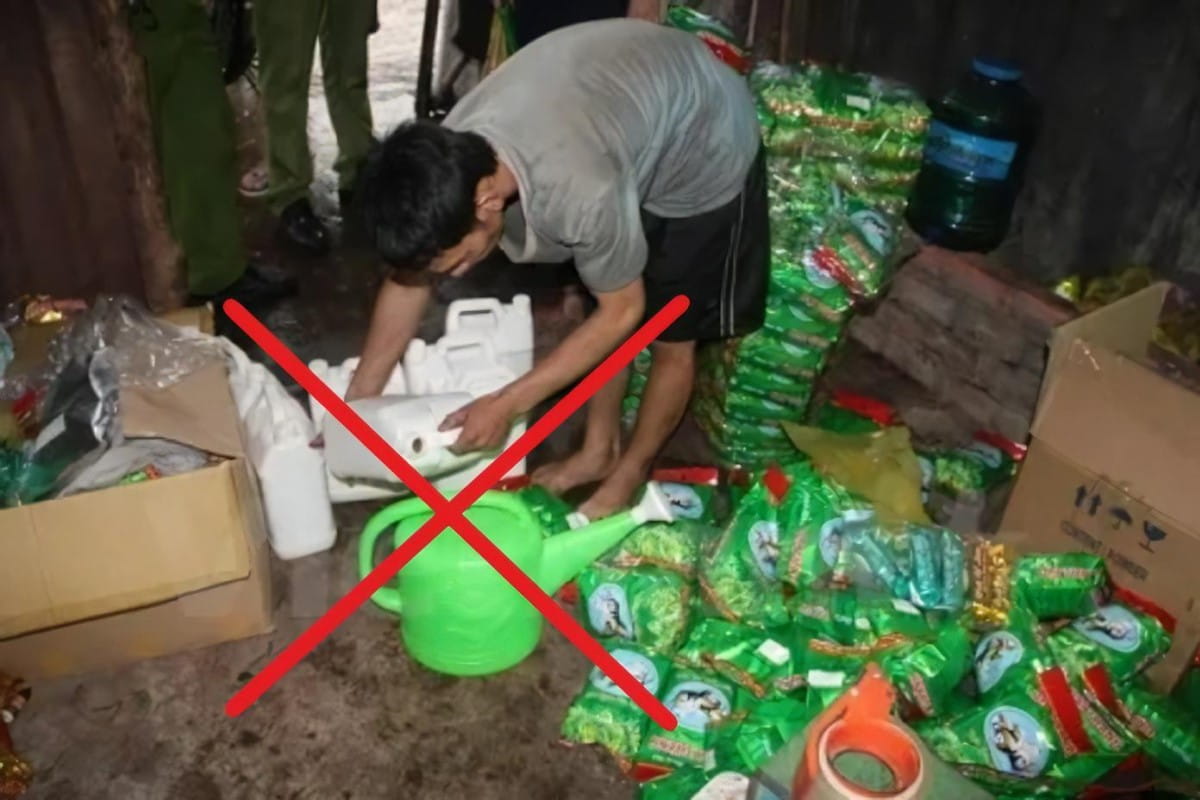
Most low-priced “lotus tea” on the market is not scented with lotus at all. It is scented with synthetic flavor compounds — often procured in powdered or liquid form. The active chemicals commonly used include benzyl acetate (to mimic jasmine, which is similar enough to pass at a glance) and p-dimethoxybenzene, which approximates the lotus note. These are organic compounds classified in the toxic range, and they are not included in Vietnam’s Ministry of Health list of approved food additives.
The economics of this substitution are staggering. A small tube of synthetic lotus flavor — roughly the length of two finger joints — is enough to scent an entire hundred kilograms of tea. For unscrupulous producers, the margin is irresistible.
Health Concern
Experts note that while deaths from drinking chemically scented teas have not been documented, the synthetic compounds involved are not approved for food use. At low doses the effects may be subtle; at higher or repeated exposure, these compounds can affect the nervous system and have been associated with dizziness and discomfort. The long-term research remains limited, but the compounds themselves are not considered safe for consumption.
The Five Tests — How to Identify the Real Thing
Here is where experience becomes practical. Distinguishing authentic West Lake lotus tea from a counterfeit is not as difficult as producers of fakes would like you to believe. You don’t need lab equipment. You need your senses and a few minutes of attention.
1. The Smell Test
Open the package and bring it close to your nose without forcing the tea toward you. Real lotus tea — whether traditionally dry-scented or fresh-scented style — releases its fragrance gently. The scent drifts toward you rather than striking you. It is multi-layered: there is the floral note of the lotus, of course, but underneath it you will also detect the grassy, slightly toasted quality of the base tea. The two smells coexist; neither overwhelms the other.
Chemically scented tea behaves differently. The fragrance hits hard and fast the moment the package is opened — sometimes almost aggressively so. It tends to smell one-dimensional, dominated entirely by an artificial floral note with no secondary character. Experienced tea drinkers often describe it as “sharp” or “acrid.” If the smell triggers a headache or irritates your sinuses after a few moments, that is a meaningful warning sign.
Another reliable test: after you have brewed the tea, smell the spent leaves in the infuser. With authentic tea, the lotus scent persists in the wet leaves even after three or four steepings. With synthetic tea, the fragrance disappears rapidly — often entirely by the second steeping.
2. The Look of the Dry Leaves
Authentic traditionally scented lotus tea has dry leaves that tend toward gray-black, sometimes described as “dark like the color of old iron.” This darker hue comes from repeated contact with the moisture in the fresh gạo sen during multiple scenting cycles. The leaf shape is typically small, tightly rolled, and relatively uniform in size — the natural result of using quality tea buds as the base. In authentic lotus tea, you may occasionally notice tiny remnants of lotus stamens among the leaves
Fake lotus tea made on a cheaper base is more likely to show bright-green or artificially uniform coloring, or conversely, uneven coloration suggesting a mix of grades. The leaves may be larger, coarser, or more broken. There should be no oily sheen on the surface of the leaves; a suspicious shine suggests chemical treatment. If the leaves feel slightly sticky when you handle them, treat that as a red flag.
3. The Brewed Water
Authentic West Lake lotus tea, when brewed properly — ideally at around 80°C rather than a full boil, which can over-extract the leaves and blunt the fragrance — produces a liquor that is pale golden, clear, and luminous. Holding the cup up to light, you can see through it.
Counterfeit or low-quality lotus tea tends to brew darker: a flat brown or murky amber. The color may also fade unusually fast between steepings, losing both hue and fragrance within the first two cups. When authentic tea grows lighter in color after several brews, the scent lingers even as the visual impression softens.
4. The Taste
Drinking the tea is the final and most definitive test. Real West Lake lotus tea greets you with a gentle initial astringency — the natural quality of good green tea — that transitions smoothly into a clean, sustained sweetness at the back of the palate. This sweetness is not added sugar; it is the inherent quality of high-grade tea in combination with lotus. The sensation lingers well after you have swallowed, sometimes described as a cooling, refreshing quality that spreads through the throat and chest.
Chemically scented teas often taste flat or harsh. You may notice a faint artificial quality — a kind of synthetic sweetness that doesn’t quite sit right — or an unpleasant tingling at the tip of the tongue. Some people describe the sensation as slightly numbing. The taste also tends to be shallow: loud at first, then absent, with no real finish.
5. The Price and Packaging
Reputable producers of authentic West Lake lotus tea do not hide the details of what they have made. A legitimate product will specify clearly on the packaging: the origin of the base tea (Thai Nguyen, Tan Cuong), the lotus source (West Lake, Hanoi), the production method (number of scenting cycles, whether dry-scenting or fresh-scenting), and the producer’s full contact information.
Counterfeit packaging tends to be vague — labels like “lotus-flavored tea” or “naturally fragrant tea”. Some forged products have no label at all, or labels with misspellings and incomplete manufacturer details.
And then there is the price. If a product claims to be authentic West Lake lotus tea but costs less than US$ 200-300 per kilogram, that is mathematically impossible given what genuine production requires. A lower price is not evidence that you have found a deal. It is almost always evidence that the product is not what it claims to be.
Side-by-Side: Authentic vs. Counterfeit
| Characteristic | ✦ Authentic | ✦ Counterfeit |
|---|---|---|
| Dry leaf color | Gray-black to dark olive, naturally uneven | Bright green or unnaturally uniform; may appear oily |
| Fragrance on opening | Gentle, drifting; multi-layered with tea undertone | Hits fast and hard; one-dimensional; may be irritating |
| Brewed liquor color | Pale golden; clear and luminous | Flat amber or murky brown |
| Taste profile | Gentle astringency → sustained sweet finish; cooling sensation | Flat, harsh, or artificially sweet; possible tingling tongue |
| Fragrance longevity | Persists through 3–4+ steepings; lingers in spent leaves | Fades sharply after 1–2 steepings; gone in wet leaves |
| Packaging | Clear origin, producer | Vague wording; missing details; possible misspellings |
| Price range | US $700-1000 per kg (2.2 lbs) or more | Under $300 per kg; price drops when haggled |
West Lake Lotus Tea vs. Other Lotus Teas
A separate but equally important distinction lies in the lotus variety used for scenting. For an informed buyer, this difference matters.
The variety most prized for scenting tea is sen Bách Diệp — a hundred-petaled lotus with thick, layered petals, a soft pink hue, and a notably deep, clean fragrance. It is the nature of this cultivar itself that gives lotus tea its signature aromatic depth. When harvested at the precise moment as the blossom begins to open in the early morning hours, its fragrance is at its most concentrated and ideal for scenting.
Tea labeled simply as “Trà sen” may be scented with other lotus varieties. These can still produce a pleasant aroma, but the fragrance profile is typically lighter, less layered, and less persistent. The difference is not a matter of authenticity, but of botanical character and quality.
For those seeking a more refined and enduring fragrance, the key detail to look for is the use of sen Bách Diệp. Not all lotus-scented teas are created equal, and the variety of the flower plays a defining role in the final cup.
Why This Matters Beyond the Cup
There is a dimension to this issue that extends beyond personal health or financial value. West Lake lotus tea is an expression of a living craft tradition — one practiced by a small number of skilled artisans whose families have worked with this tea for generations. When the market is flooded with synthetic substitutes, it does two things: it exposes consumers to compounds that should not be in their food, and it slowly erodes the economic foundation that keeps traditional production viable.
The artisans who do this work are not running large operations. They are managing small batches. Every blossom harvested for tea scenting is a blossom that required months of growth, a precise window of harvest, and hours of careful hand-labor. That fragility is also what makes the product so extraordinary when it is done right.
Choosing authentically — even when the price is higher — is a small act of support for something that could otherwise disappear. The knowledge of how to scent tea with lotus the right way is not written in any manual. It is passed from person to person, refined over decades. Demand for the genuine article is the only thing that keeps that knowledge worth holding onto.
Where to Find Authentic West Lake Lotus Tea
For anyone outside Vietnam — or even within Vietnam, navigating an increasingly crowded marketplace — finding a reliable source for genuine West Lake lotus tea takes some care. The combination of high price, limited supply, and opaque supply chains makes this a category where provenance really matters.
Noble Viet Tea was built around exactly this problem. As an online business specializing in authentic West Lake lotus tea and other premium Vietnamese teas, Noble Viet Tea sources directly from artisan producers in Hanoi, with a focus on transparent sourcing and traditional production methods. The teas available through Noble Viet Tea — including both the traditional dry-scented lotus tea and the fresh-scented style — are crafted without synthetic flavor agents. The tea base comes from Tân Cương, Thái Nguyên—widely regarded as Vietnam’s finest tea-growing region—using naturally grown or organic cultivation practices, while the lotus used is Bách Diệp: in the reserved grade, sourced from West Lake, and in the classic grade, grown in areas with similar soil conditions surrounding West Lake.
For customers in the United States, the European Union, and beyond, Noble Viet Tea offers a way to access this category with confidence. The goal is not simply to sell tea, but to make it possible for people anywhere in the world to experience what West Lake lotus tea actually is — not a flavor approximation, but the real thing, in the form it has taken for generations along the shores of Hanoi’s most storied lake.
If this article has given you reason to be more careful about what you buy — and more curious about what the genuine experience offers — that curiosity is worth following. There are few things in the world of tea as quietly extraordinary as a properly made cup of Authentic West Lake Lotus Tea.