
There is a tea in Vietnam that takes 1,500 lotus blossoms to make a single kilogram (2.2 lb). It can only be crafted during one short season each year. It requires up to 21 days and seven rounds of careful layering and drying before it is ready to pour. And yet, for those who have ever raised a warm cup of it to their lips — catching that first whisper of lotus fragrance rising with the steam — every bit of that effort makes perfect sense.
This is West Lake Lotus Tea, known in Vietnamese as Trà sen Tây Hồ — the most authentic form of Vietnamese lotus tea. It is one of the most celebrated specialties in all of Vietnamese cuisine, a drink so deeply tied to the culture of Hanoi that locals have long called it “Thiên Cổ Đệ Nhất Trà” — The First Tea Under Heaven. For centuries, it was a luxury reserved only for emperors and the highest nobility. Today, it remains rare, precious, and unmistakably Hanoian.
At Noble Viet Tea, we believe this extraordinary tea deserves to be known far beyond the shores of Vietnam. Whether you are a seasoned tea enthusiast or simply curious about one of Vietnam’s most storied beverages, this is the story you need to know.
A Tea Born from a Very Special Lake
West Lake — Hồ Tây in Vietnamese — is not just any body of water. It is the largest freshwater lake in Hanoi, a place soaked in more than a thousand years of history. Temples line its banks. Legends cling to its mists. And from late May through early September each year, its surface comes alive with the pale pink blossoms of a very particular lotus: the Bách Diệp, or hundred-petal lotus.
This is not the bold, wide-petaled lotus you might picture from a photograph. The Bach Diệp is more delicate — its petals small and numerous, its color a soft blush pink, its fragrance extraordinarily refined. Where it grows matters enormously. Attempts to transplant this lotus to other regions have consistently produced flowers with a harsher, more pungent scent. Something about the particular soil composition, the microclimate, and the mineral-rich water of West Lake gives this lotus a quality that simply cannot be replicated elsewhere.
The lotus grows primarily in several ponds and small lakes within the Tây Hồ district — including Đầm Trị, Ao Thủy Sứ, Đầm Đông, and a few others — each managed carefully by the families who have tended them for generations. At the height of the season, these ponds can yield as many as 10,000 blossoms in a single day. And yet even that abundance is not always enough to meet the demand of the small community of tea-makers who depend on them.
The Two Ingredients That Make Everything Possible
At its heart, West Lake Lotus Tea is made from just two ingredients: premium loose leaf tea and the lotus blossoms of West Lake. But the simplicity ends there.
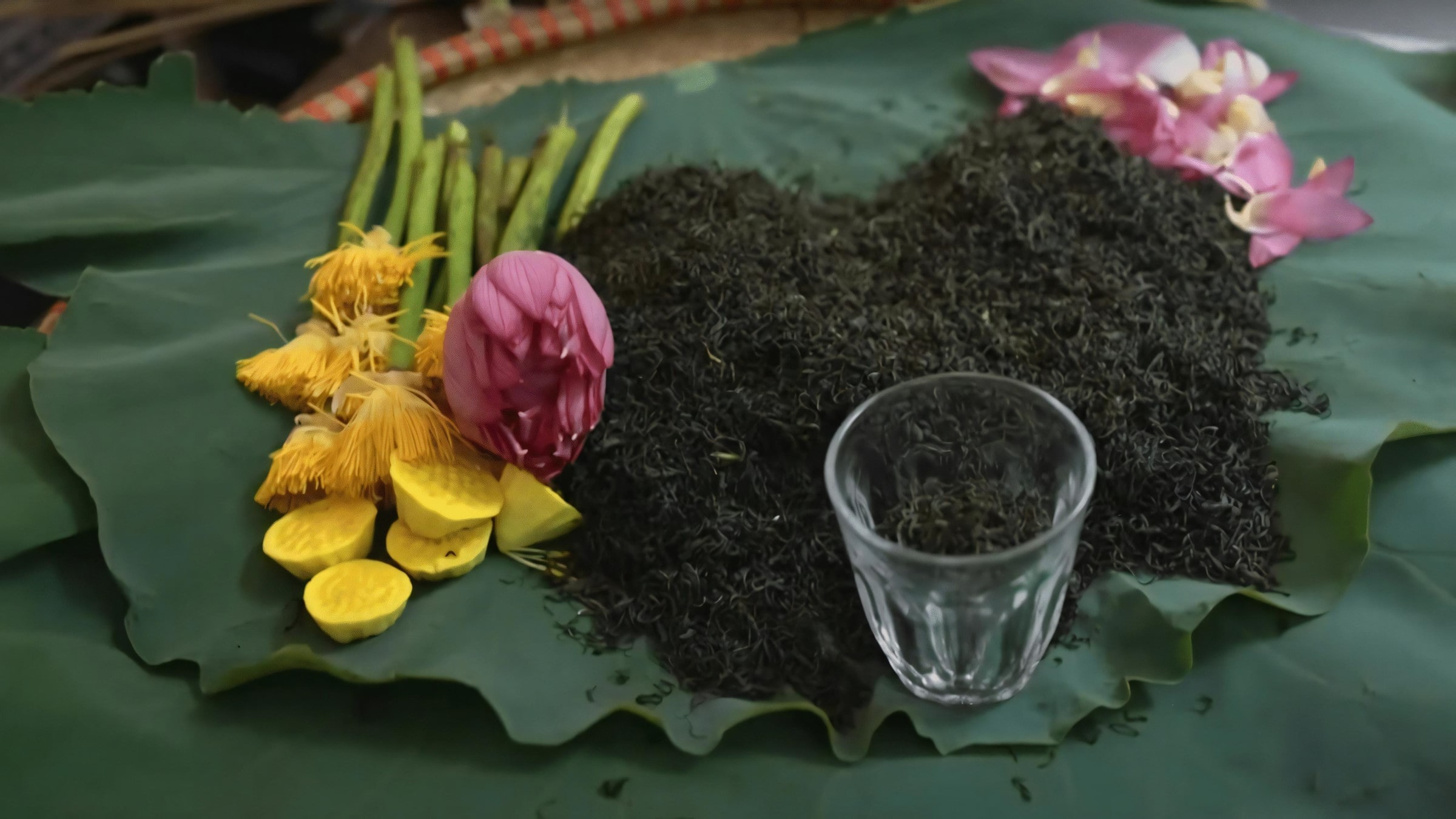
The tea itself is sourced from some of Vietnam’s most respected growing regions. Traditionally, artisans favor Tân Cương green tea from Thái Nguyên province — a tea prized for its clean, slightly grassy sweetness that echoes the flavor of young rice. Others use Shan Tuyết, an ancient wild-tree varietal harvested from the mountains of Hà Giang or Sơn La. Whatever the source, the tea must be of exceptional quality, because the lotus fragrance will only elevate what is already good — it cannot disguise what is not.
The lotus, meanwhile, contributes not its petals but something even more precious: the tiny white grains nestled within its stamens, known in Vietnamese as gạo sen, or “lotus rice.” These pale, fragrant granules are the concentrated essence of the flower’s scent. Extracting them is painstaking work — each grain must be separated by hand without being crushed, since any damage releases the fragrance prematurely and diminishes the final quality of the tea. On average, it takes about 1,000 lotus blossoms just to gather 1000 grams of lotus rice. That single fact tells you almost everything you need to know about why this tea costs what it costs.
The Art of Making West Lake Lotus Tea: A Process Unlike Any Other
The harvest begins before sunrise. Lotus flowers must be picked in the early morning hours — typically around four or five o’clock — while the mist still lies on the water and the petals have not yet been touched by direct sunlight. Once sunlight reaches a lotus blossom, its fragrance begins to dissipate rapidly. The window of optimal harvest is narrow, and the tea artisans of Quảng An ward know this as well as they know anything.
After harvesting, the blossoms are brought back to the workshop and the delicate work of separation begins. The petals, stamens, and lotus rice are carefully divided. It is the lotus rice alone that will go into the tea.
The traditional infusion process — and it is far more than just mixing things together — involves building alternating layers of dry tea and lotus rice in a container, covering the arrangement with paper, and allowing the tea to slowly absorb the fragrance. After a period of absorption, the mixture is sifted to remove the spent lotus rice, and the tea is gently dried. Then the entire process begins again: new lotus rice, new layering, new drying. This cycle repeats at least seven times over the course of 21 days. Some artisans say that the more rounds of infusion a tea undergoes, the more fully its fragrance develops — layered and complex rather than sharp and one-dimensional.
There are also strict traditions observed during production that speak to how seriously the craft is taken. Artisans are expected to bathe before beginning the day’s work and must not wear perfume or heavily scented clothing, lest any competing fragrance contaminate the tea’s delicate aroma. Some traditional accounts describe even more elaborate precautions — stories that, whether taken literally or not, underscore how completely the culture of this craft is oriented around protecting the tea’s purity.
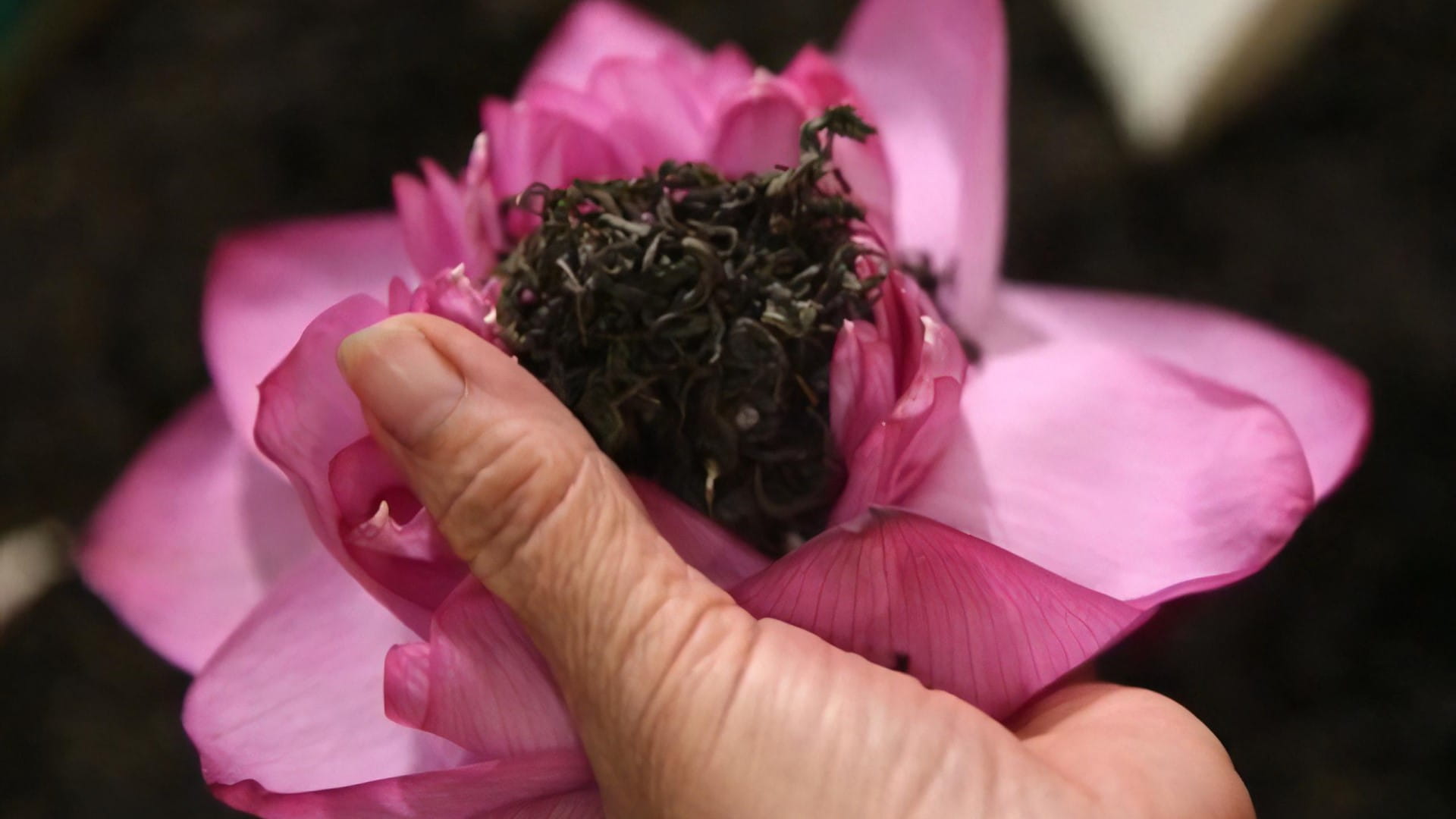
A second and more accessible style also exists: the ướp xổi method, or quick-infusion. In this approach, 15 to 20 grams of dry tea are placed directly inside a fresh, partially opened lotus blossom early in the morning. The flower is then gently closed, wrapped in lotus leaves, tied at the stem, and placed in a vase for a short time. Once the tea has absorbed enough fragrance, the blossom is unwrapped and the tea can be used — often that very day. The beauty of this method lies partly in the experience itself: reaching into a fresh lotus flower to retrieve your tea is an almost ceremonial act that feels perfectly in keeping with the spirit of the drink.
The Taste of Vietnamese Lotus Tea
Words do limited justice to this tea, but here is an honest attempt.
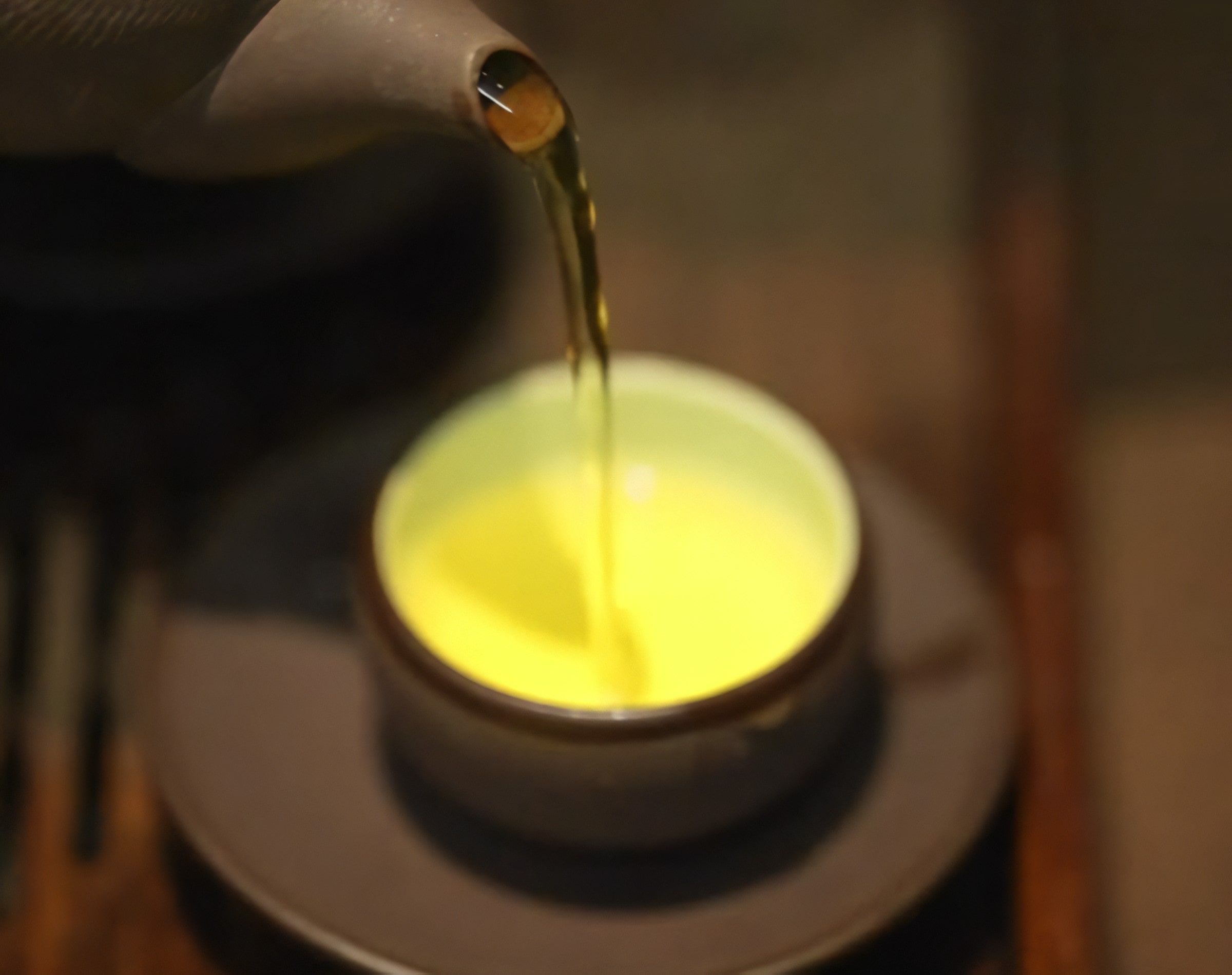
When brewed correctly, West Lake Lotus Tea produces a liquor that is clear and golden, with faint green undertones — a color that Vietnamese writers have compared to young rice husks. The aroma rises from the cup before you even bring it to your lips: a scent that is floral without being sweet, clean without being sharp, and somehow reminiscent of an early summer morning near water.
The taste follows in a similar register. There is a gentle astringency at first — the natural character of high-quality loose leaf tea — which quickly gives way to a lingering sweetness at the back of the palate and throat. The lotus fragrance does not announce itself loudly; it wraps around the experience quietly, the way good perfume fills a room without being traced to a single source. It is a tea that rewards slow, attentive drinking rather than quick consumption.
The Vietnamese have a phrase for this quality: “tiền chát nhẹ, hậu ngọ sâu” — a light initial astringency, followed by a deep, lingering sweetness. It is considered the hallmark of great tea in Vietnamese culture, and West Lake Lotus Tea is perhaps its most celebrated expression.
How to Brew West Lake Lotus Tea Properly
Vietnamese tea culture has a guiding principle expressed in five priorities: water first, then tea, then brewing method, then the teapot, then good company. Each element matters, and West Lake Lotus Tea is particularly unforgiving of shortcuts.
The traditional vessel of choice is an unglazed clay teapot, because the porous clay is believed to enhance and preserve fragrance over time. Glass or porcelain pots work as well, though connoisseurs tend to prefer clay. Before brewing, both the pot and the cups should be warmed by rinsing with boiling water and then emptying them.
The tea is placed in the pot and allowed to rest for about three minutes — a brief pre-warming that “awakens” the leaves and opens up the fragrance before water is added. Water temperature is critical: it should be brought fully to a boil, then allowed to cool to around 80 degrees Celsius (175 degrees Fahrenheit). Water that is too hot will scorch the leaves and drive off the delicate lotus fragrance; too cool and the tea will not develop properly.
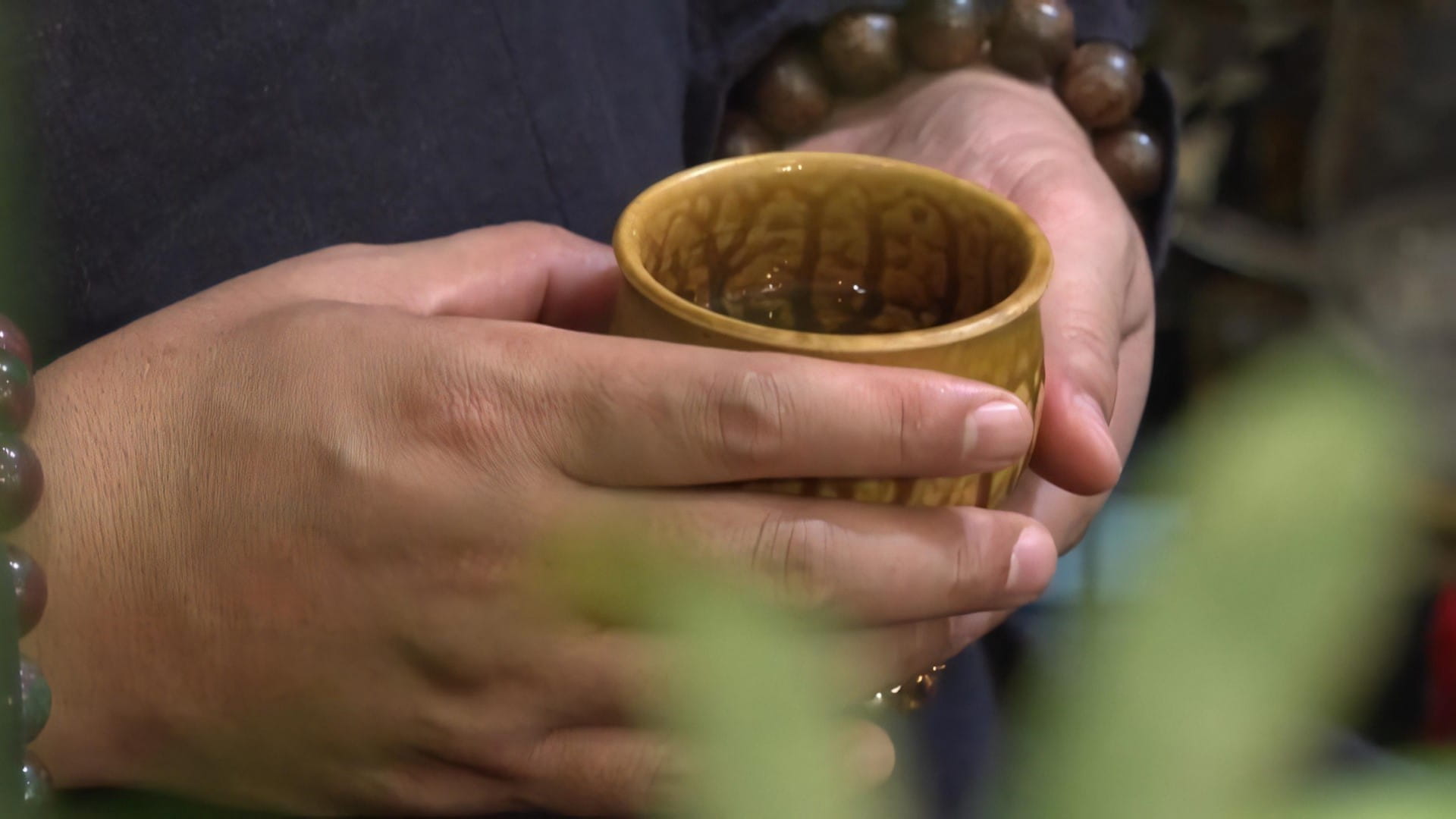
Water is poured into the pot gradually — first to about halfway — then topped off. The tea steeps for 30 seconds to one minute before being poured first into a sharing pitcher (chén tống) and then distributed into small individual cups (chén quân). The small cup is not merely a serving vessel; it is part of the ritual, encouraging the drinker to take slow, contemplative sips rather than gulps.
A single serving of lotus tea can be re-steeped two to five times depending on the quality of the tea inside. The flavor will gradually lighten across each infusion, but — and this is one of the most reliable markers of authentic West Lake Lotus Tea — the lotus fragrance will linger in the spent leaves even after the liquid has faded.
More Than a Drink: A Cultural Expression
To understand West Lake Lotus Tea fully, it helps to understand what tea means in Vietnamese culture — and particularly what it means in Hanoi.
Tea drinking in Vietnam is not a solitary habit. It is a social act, a gesture of respect, and a vehicle for connection. When you offer someone good tea, you are saying something about how you regard them. When you serve lotus tea specifically — especially the traditional kind — you are reaching for the highest register of hospitality your culture makes available.
Historically, West Lake Lotus Tea was reserved for the imperial court. Ordinary people did not have access to it. For a deeper look at the origins and cultural meaning of this tea, see Lotus Tea Legend — The Sacred History of the West Lake Lotus. Over time, as the tea became more widely known, it remained a drink associated with connoisseurship and refinement — not because of snobbery, but because genuine appreciation of it requires a certain quality of attention. One Vietnamese journalist captured this well when she wrote that this tea is “certainly not for those who do not know how to truly savor it.” That is not a gatekeeping statement; it is an invitation to slow down.
West Lake Lotus Tea is also one of the most meaningful gifts in Vietnamese culture. Overseas Vietnamese — people who left their homeland and built new lives abroad — have spoken of the emotion that comes with drinking this tea far from home. The scent carries memory in a way that is hard to articulate and impossible to dismiss. When Vietnamese musician Trịnh Công Sơn, one of the country’s most beloved songwriters, famously insisted on obtaining two kilograms of West Lake Lotus Tea to bring south and share with friends, he was not simply buying a beverage. He was carrying a piece of Hanoi with him.
Today, that same tea is beginning a quieter journey beyond Vietnam. What once belonged exclusively to an emperor’s table is now, slowly and carefully, finding its way to the rest of the world.
An Invitation to Experience the Essence of Vietnamese Lotus Tea
There are certain things that cannot be fully explained in advance — they simply need to be experienced. West Lake Lotus Tea is one of those things. You can read about the 1,500 blossoms, the 21 days, the seven rounds of patient infusion. You can understand intellectually why it is expensive and why it is rare. But none of that prepares you adequately for the moment when a properly brewed cup of the real thing is in your hands.
The fragrance arrives first. Then the warmth of the cup in your palms. Then that initial, gentle astringency that softens into something sweet and clean and faintly floral — a flavor that lingers on the tongue long after you’ve set the cup down. It is a quiet drink in the best possible sense: one that asks you to be present, to pay attention, and to appreciate the extraordinary amount of care and human skill that went into producing something so seemingly simple.
At Noble Viet Tea, bringing this experience to tea lovers around the world is not just a business — it is a genuine commitment to a tradition that deserves a wider audience.
We hope you’ll give it a cup.