
In the hierarchy of Vietnamese tea culture, one variety stands alone as the ultimate expression of refinement and artisanal mastery. Lotus tea, known locally as trà sen, represents not merely a beverage but a centuries-old tradition that once graced only the tables of emperors and nobility. Among all lotus teas, the legendary West Lake lotus tea of Hanoi holds an unrivaled position as Vietnam’s most precious tea treasure.
The Historical Significance of Vietnamese Lotus Tea
Vietnam proudly claims its place among the world’s ancient tea cradles, supported by five compelling pieces of historical evidence. The country possesses vast forests of ancient tea trees on remote mountains, including specimens in Suối Giàng of Yên Bái, Xín Mần of Hà Giang, and Tà Xùa of Sơn La. Some of these ancient trees stand ten meters tall and require twenty-three people to encircle their trunks with joined arms. Even China, a recognized tea powerhouse, cannot claim such magnificent specimens.
Archaeological discoveries in 1968 unearthed fossilized tea leaves and stems in Phú Thọ, with scientific analysis confirming that tea appeared in Vietnam during the Stone Age of the Hòa Bình culture, approximately one hundred thousand years ago. This discovery places Vietnamese tea culture among the most ancient in human history.
Vietnam preserves a unique tea tradition found nowhere else on earth: the simple fresh tea bath of the countryside. Rural Vietnamese families have practiced this for generations, harvesting fresh leaves each morning, boiling them in rainwater or well water, and serving the infusion in communal bowls to guests. Through these shared tea bowls, villagers discuss harvests, family matters, and village life, strengthening community bonds. This ancient practice demonstrates that Vietnamese people have been drinking tea for millennia.
The famous eleventh-century Zen Master Viên Chiếu of the Lý Dynasty wrote a celebrated verse: “Tặng quân thiên lý viễn, tiếu bả nhất âu trà” (To honor you who traveled a thousand miles to visit, I offer a cup of tea with a sincere smile). This verse, dating back over one thousand years, provides written evidence that tea drinking was already well-established in Vietnamese culture during the Lý Dynasty.
Perhaps most telling is the ancient Quan Họ folk song “Mời Trà Mời Nước” from Bắc Ninh, which describes the ritual of offering tea to guests. Within this song lies a subtle revelation: through the simple tea bowl she prepares, a young woman opens the door to her heart, inviting suitors to understand her inner world. This demonstrates how deeply tea has been woven into Vietnamese social and romantic customs.
Why West Lake Lotus Tea Stands Apart
Among Vietnam’s many lotus-growing regions including Phủ Lý in Hà Nam, Hải Phòng, and various other areas, only West Lake lotus meets the exacting standards required for authentic lotus tea. This exclusivity rests on two fundamental reasons.
First, the exceptionally fertile mud of West Lake produces notably larger lotus blossoms. Research comparing one hundred West Lake lotus flowers with one hundred flowers from Phủ Lý reveals that West Lake lotuses yield approximately one hundred twenty grams of lotus stamens, while Phủ Lý lotuses produce only eighty grams. The West Lake lotus blossoms grow nearly fifty percent larger than those from other regions.
Second, and perhaps more significantly, West Lake occupies sacred ground in Vietnamese geomancy. According to feng shui principles, spiritually powerful land generates talented people and absorbs abundant celestial energy from heaven and earth. Lotus flowers growing in this sacred mud absorb this vital energy, developing a fragrance distinctly superior to lotus from other regions. An ancient Vietnamese poem captures this distinction perfectly: “Đấy vàng đây cũng đồng thau, đấy hoa thiên lý đây sen Tây Hồ” (That may be gold, this is brass; that may be exotic flowers, this is West Lake lotus). This verse expresses Hanoian pride in their incomparable lotus.
West Lake lotus possesses a unique characteristic: the blossoms open before sunrise. Therefore, lotus tea artisans must require farmers to row their boats onto the lake at four in the morning to harvest the flowers. On mornings when lotus blooms are half-opening, harvesting begins at three. Harvesting thousands of flowers demands this early schedule because if farmers arrive late after sunrise, the flowers will have fully opened and released their fragrance into the air. Late harvesting means the precious scent has already dissipated.
The Refined Art of Distinguishing True Lotus from Water Lily
Before understanding lotus tea craftsmanship, one must first master the fundamental distinction between true lotus flowers (sen) and water lily (quỳ). Many people purchase water lily by mistake from street vendors, only to find the flowers never bloom when taken home.
Two reliable methods differentiate these flowers. Examining the outer appearance, water lily appears more pointed and slender, while lotus blossoms look fuller and rounder. The petal color also differs subtly: lotus petals show a pinkish tint, while water lily petals display deeper coloring.
The most definitive test lies within the flower structure itself. Carefully separate the petals from the inside outward. Water lily contains only large petals of uniform size from center to edge, with just a few petal layers. True lotus, however, displays large outer petals surrounding many smaller inner petals that embrace the yellow stamens. This double-layer structure with small inner petals clasping the stamens confirms authentic lotus.
Vietnam grows two lotus varieties: pink lotus (Hồng Liên Hoa) and white lotus (Bạch Liên Hoa). Lotus tea artisans use exclusively pink lotus, never white lotus, for scenting tea.
The Labor-Intensive Scenting Process
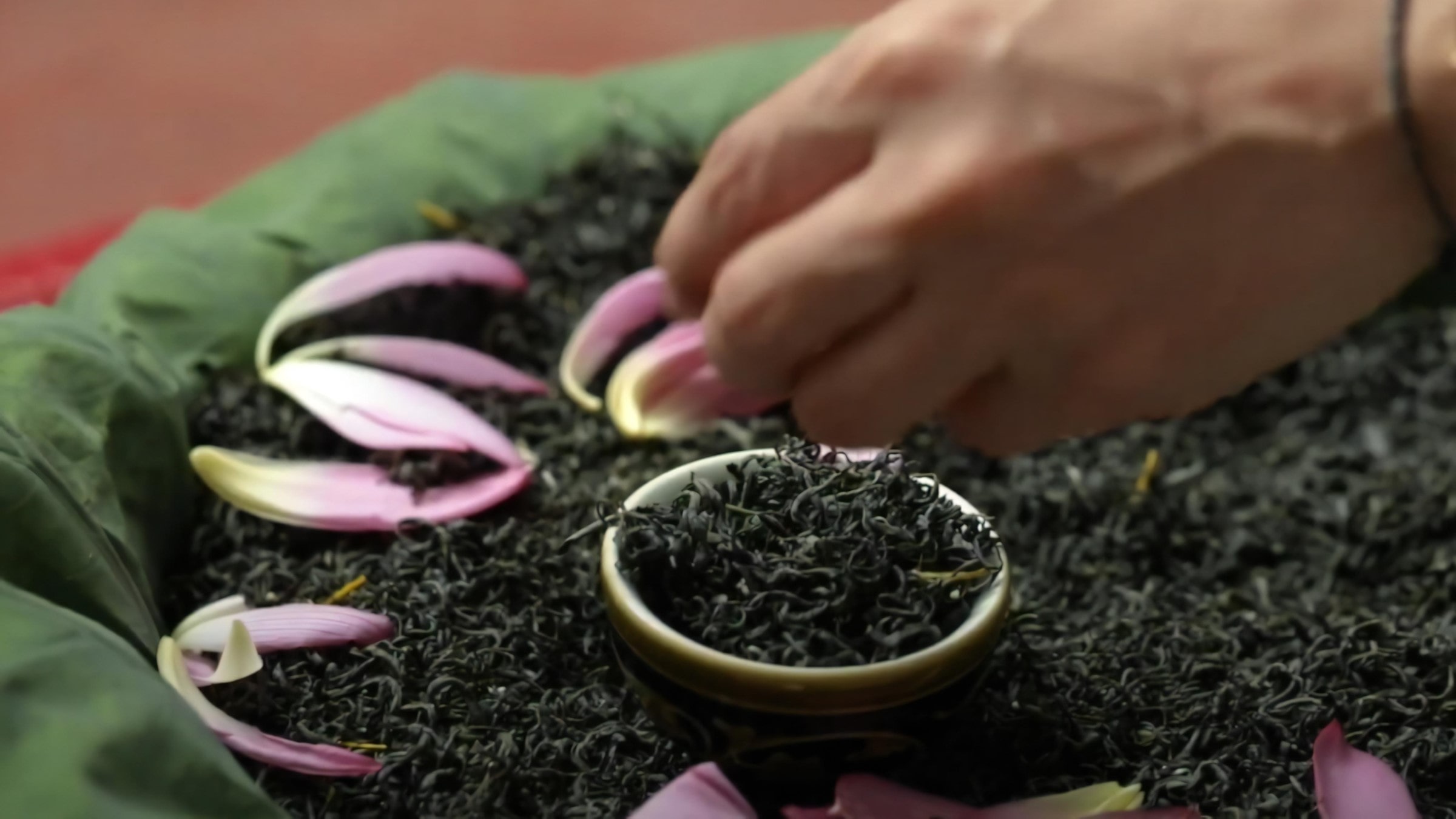
Creating authentic lotus tea demands extraordinary dedication and meticulous technique across every stage of production. The process begins immediately after harvesting, when artisans must extract the lotus stamens from within each blossom. Inside each lotus flower, delicate yellow stamens bear small white rice-like grains. These grains contain the flower’s concentrated fragrance. Artisans extract only these fragrant grains for scenting, never scenting tea with whole flowers as one might observe in displays.
Extracting lotus stamens constitutes an art form in itself. The overnight-bloomed flowers arrive extremely moist. Extracting stamens requires precise finger technique—too clumsy and the grains remain stuck in the stamen threads, unable to separate cleanly. Excessive force crushes the delicate grains, releasing and spoiling their fragrance. True artisans develop fingers that dance across the stamens like pianists playing keys, completing extraction from each flower in mere seconds. Master artisans process one thousand flowers daily, sometimes reaching two or three thousand. Without extraordinary speed, even working until one in the afternoon would not suffice to complete the harvest.
Two Distinguished Traditions: Mạn and Thái Lotus Tea
Vietnamese lotus tea tradition divides into two distinct lineages: Lotus Tea Mạn and Lotus Tea Thái. Lotus Tea Mạn involves scenting ancient tree tea from Hà Giang mountains. This traditional method follows elaborate ancient protocols, beginning with careful tea selection.
Historical tea masters selected only the finest ancient tree tea buds from Hà Giang. After sorting to remove all old stems and unqualified leaves, they placed these premium buds into earthenware crocks similar to those used for fermenting rice wine. This step destroys tannins, the compounds responsible for tea’s astringency. Ancient practitioners believed that when appreciating lotus tea, one should savor the lotus fragrance as primary, with tea flavor secondary. Therefore, they eliminated astringency through this fermentation process.
After fermentation renders the tea quite moist, artisans must roast it dry again to restore its original dry state. Once dried, they pour the tea into earthenware jars, seal them with dried banana leaves, and set them aside. Traditional families stored these sealed jars for three to five years. This extended aging causes the tea to undergo transformation, developing a porous, spongy texture. The more porous the tea becomes, the more lotus fragrance it can absorb during scenting.
When one has the opportunity to taste traditionally-made Lotus Tea Mạn, the liquor appears pale and light, yet carries intense lotus fragrance. This paleness results from the tea’s extraordinary absorption of lotus scent through its porous structure developed over years of aging.
Later, as tastes evolved, tea drinkers desired both lotus fragrance and tea flavor. This preference shift led artisans to develop Lotus Tea Thái, scenting fresh Thái Nguyên green tea from the renowned tea region. This approach preserves more of the tea’s original character while still infusing the prized lotus perfume.
The Scenting Ceremony
The scenting process itself follows precise ritual. Artisans use a box or container, spreading a thin layer of tea at the bottom, then sprinkling a thin layer of lotus stamens, followed by another thin tea layer, then stamens, continuing this alternation until both tea and stamens are exhausted. They seal the container tightly and allow it to rest.
The resting duration depends on daily weather conditions. During lotus blooming season in summer heat, temperature dictates timing. On cooler days around thirty-two to thirty-four degrees Celsius, artisans rest the tea for two full days, approximately forty-eight hours. On hotter days reaching thirty-six to forty degrees, the resting period shortens to one and a half days or thirty-six hours.
However, the tea does not rest undisturbed for this entire period. Every two to three hours, artisans must “aerate” the tea by opening the container and turning the mixture. This aeration proves essential because lotus stamens carry high moisture content. When layers of tea and moist stamens rest sealed together, internal temperature rises. Without periodic aeration to release heat, the stamens will spoil. Spoiled stamens ruin the entire batch, leaving no option but disposal. This constant vigilance throughout day and night makes lotus tea scenting a demanding art requiring both skill and timing.
After one and a half to two days, the tea has absorbed the lotus fragrance but also considerable moisture, leaving it quite wet. Artisans must then sift out all lotus stamens from the tea and pack the moist scented tea into calico fabric bags for drying. Historically, before modern drying equipment, traditional methods divided into two approaches: water-bath drying and heat drying.
Water-bath drying involved placing a large pot of boiling water on the stove, then arranging the calico bags of moist scented tea around the pot’s exterior, using the pot’s heat to gradually dry the tea. Heat drying employed charcoal fires in tin-constructed drying cabinets with multiple racks, where bags of scented tea sat on successive levels above a charcoal fire below, dried by rising heat.
Drying constitutes an art in itself: removing moisture while preserving the captured lotus fragrance within the tea. This balance represents the secret mastery of accomplished lotus tea artisans. Contemporary artisans benefit from modern drying equipment that makes this process more reliable and consistent than the entirely manual methods of decades past. In earlier years, artisans relied entirely on their hands to sense water temperature and drying heat, never using thermometers. They determined water temperature and drying duration purely through tactile sensation and accumulated experience.
After the first drying, artisans scent the tea a second, third, fourth, and sometimes fifth or sixth time. Multiple scentings become necessary because lotus fragrance intensity varies significantly with weather conditions. On average, each scenting requires approximately two hundred lotus flowers per kilogram of tea. Multiplying across five to six scenting cycles demands between one thousand and one thousand four hundred West Lake lotus blossoms per kilogram of finished lotus tea. This extraordinary flower-to-tea ratio explains why authentic lotus tea commands premium pricing and why it historically remained exclusive to royal and aristocratic circles.
Sacred Protocols and Taboos
The lotus tea crafting tradition carries strict protocols and taboos passed down through generations. Lotus flowers symbolize purity, therefore the lotus pond cannot tolerate impure energies. During the scenting process, artisans naturally cannot work in air-conditioned spaces. Even in forty-degree heat, they cannot use fans or air conditioning, because artificial cooling causes lotus stamens to shrivel and lose fragrance rapidly. Regardless of heat intensity, artisans must work without cooling devices.
Artisan hands must remain scrupulously clean. Before handling lotus for tea scenting, artisans never wash hands with soap or apply any fragrant products. When conducting lotus tea experiences, artisans must insist that participants use no perfume whatsoever, as external fragrances severely compromise lotus scent.
One particularly intriguing traditional taboo, though not scientifically explained, persists in families passing lotus tea craft from generation to generation: women during menstruation must absolutely refrain from making lotus tea. Elders maintained that a menstruating woman approaching lotus tea causes the lotus to lose its fragrance. This belief passes unchanged through traditional lineages.
The Ritual of Appreciation
Authentic lotus tea demands equally refined appreciation. Historical aristocrats in the imperial capital of Thăng Long elevated tea drinking to high art. While rural Vietnamese enjoyed simple fresh tea served in communal bowls, the aristocratic class infused this humble tradition with elegance, creating sophisticated protocols for tea appreciation.
When appreciating tea, the aristocracy sat on sandalwood platforms or ceremonial chairs, always maintaining relaxed, unhurried posture. The sitting position reflected inner calm—no rigidity, no tension, similar to meditation posture. Before lifting the teacup, one releases all worldly concerns about earning one’s livelihood, allowing the fragrant tea to receive full attention.
Aristocratic tea drinkers held cups using three fingers in a gesture called “tam long giá ngọc” (three dragons cradling jade). The thumb and index finger rest at the cup’s rim, the middle finger supports the cup base, and the ring finger extends gracefully to the side. This three-finger hold elevates the precious jade cup.
During appreciation, place the left hand beneath the right hand that holds the cup. This gesture not only supports the teacup but expresses gratitude—gratitude to rain, dew, and wind that nurtured the tea gardens; gratitude to farmers who tended the tea plants through seasons; gratitude to tea artisans who crafted this fine tea. Pausing twenty seconds while holding the cup to cultivate this gratitude transforms the tea in one’s hand into something far more precious.
After this grateful pause, slowly raise the cup to eye level. Gently move the cup from right to left and left to right, eyes following its movement. This gesture, called “du lâm sơn thủy” (wandering through forests and waters), invites appreciation of the tea’s visual beauty, particularly when using fine antique teaware.
For those practicing Buddhist contemplation, gazing into the tea cup reveals the entire universe contained within. The tea holds not only tea leaves but abundant sunlight that nourished the tea plants, countless raindrops that watered the tea gardens, moonlight that blessed the tea hills on luminous nights, and drops of sweat from farmers who tended the tea with devoted labor. When contemplating deeply, one perceives that this tea cup contains not merely tea but everything: sunshine, rain, moonlight, earth, fire, water, and the craftsmanship of ceramic artisans. This realization provides experiential proof of the Buddhist teaching of “non-self”—that nothing exists independently. Without earth, fire, water, and artisan skill, no teacup could exist.
After appreciating the cup’s beauty, slowly bring it near the nose. Inhale deeply to perceive the fragrance. Only after sensing the aroma do you lift the cup to your lips for the first sip. Note carefully: when bringing the cup to your lips, gently rotate the right wrist inward so the person seated opposite cannot see your mouth meeting the cup rim. This subtle rotation represents the discreet refinement of historic Hanoian tea culture. Without this wrist turn, the opposite person would see your mouth on the cup, but the gentle rotation conceals this intimate moment.
The first sip should be held in the mouth for three to four seconds before swallowing. This brief hold allows the tea’s full character to reveal itself—if appreciating lotus tea today, the lotus fragrance permeates the entire throat and rises into the nasal passages, enabling complete perception of its beauty. Drinking too quickly prevents experiencing anything meaningful. Masters would scold those who gulp tea hastily as “ngưu ẩm” (drinking like oxen), a derogatory term for crude consumption.
An ancient verse describes this refined pace: “Thập nhị lan can, nhất trản trà” (Ascending twelve steps of stairs requires the same time as drinking one cup of tea). This poetic image does not literally suggest climbing stairs while drinking but conveys that the leisurely time required to ascend twelve stair steps equals the time one should spend savoring a single cup of tea.
Preserving an Endangered Heritage
Very few artisans in Hanoi continue crafting traditional lotus tea today due to its extraordinary demands and elaborate technique. Master Hoàng Anh Sướng, a national tea artisan, journalist, writer, and poet, maintains this precious tradition. He shares lotus tea at every state banquet and contemplative tea ceremony he hosts. When renowned Japanese and Chinese tea ceremony delegations visit Vietnam, Master Sướng presents lotus tea with profound pride, knowing that no other nation possesses Vietnam’s unique lotus tea tradition.
This pride rests on firm foundation. The artisanal technique for crafting lotus tea demonstrates remarkable refinement, intricacy, and delicacy. Most significantly, no other country worldwide creates tea scented with lotus flowers following Vietnamese methods. Vietnamese tea artisans carry deep consciousness regarding cultural identity, and within that consciousness lives substantial pride. These artisans take genuine pride when presenting lotus tea to celebrated international tea masters because the craft embodies such demanding artistry and remains uniquely Vietnamese.
For contemporary tea enthusiasts seeking connection with this endangered heritage, understanding lotus tea’s complete story—from ancient origins through meticulous production to meditative appreciation—transforms each cup from a simple beverage into a portal connecting past and present. West Lake lotus tea represents not merely Vietnam’s finest tea but a living cultural treasure that deserves recognition and preservation for future generations.
The profound beauty of lotus tea extends beyond its exquisite fragrance and refined flavor. It embodies centuries of Vietnamese wisdom about patience, gratitude, and mindful presence. Each sip carries the devotion of artisans who wake before dawn, the purity of sacred lotus blooms, and the quiet elegance of a culture that elevated tea drinking to contemplative art. In our accelerated modern world, lotus tea offers an invitation to pause, to honor the countless hands and natural forces that create beauty, and to experience a moment of genuine peace held within a single precious cup.